

As summer winds down and cooler weather approaches, it’s time to start preparing your home for winter. While cleaning gutters and checking the furnace may be on your fall to-do list, plumbing maintenance is just as important.
Freezing temperatures can cause outdoor faucets to freeze, pipes to burst, and sump pumps to fail when you need them most. A little preventative maintenance in late summer or early fall can help homeowners avoid expensive plumbing emergencies during the winter.
If you live in Pennsylvania, New Jersey, or another area that experiences freezing temperatures, use this fall plumbing checklist before winter arrives.
1. Disconnect Your Garden Hoses
One of the easiest—and most commonly forgotten—fall plumbing tasks is disconnecting your garden hoses.
When a hose remains connected to an outdoor faucet, water can become trapped inside the faucet or the pipe leading into your home. When temperatures drop below freezing, that trapped water can freeze and expand, potentially damaging the faucet or plumbing inside your home.
Before winter:
- Disconnect all garden hoses from outdoor faucets.
- Drain the hoses and store them somewhere protected.
- Check the faucet for dripping or leaking.
- Make sure water isn't remaining trapped in the hose connection.
Don't wait until the first freezing night. Once temperatures begin consistently dropping into the 30s, it's a good idea to have this done.
2. Shut Off and Drain Outdoor Faucets
If your home has interior shutoff valves for exterior hose bibs, close them before freezing weather arrives.
After shutting off the interior valve, open the outdoor faucet to allow any remaining water to drain.
Some homes have frost-free hose bibs, which are designed to drain water from the faucet when they're properly installed and disconnected from hoses. However, even frost-free faucets can have problems if they're damaged, improperly installed, or left connected to a hose.
If you're unsure whether your outdoor faucets are properly winterized, a plumber can inspect them before freezing temperatures arrive.
3. Test Your Sump Pump
Fall is an excellent time to test your sump pump—especially before the heavy rain, snow, and spring thaw that can put your basement at risk of flooding.
A simple test can tell you whether the pump is actually working.
To test a sump pump:
- Locate the sump pit.
- Carefully pour water into the pit.
- Watch to see whether the pump turns on automatically.
- Make sure it removes the water efficiently.
- Check that the discharge line is clear and draining properly.
If your sump pump doesn't turn on, runs continuously, makes unusual noises, or isn't removing water effectively, don't wait for the next major storm to find out there's a problem.
For homes that are particularly vulnerable to basement flooding, consider whether you have adequate backup protection, such as a battery backup sump pump.
4. Flush Your Water Heater
Sediment can accumulate at the bottom of a water heater over time. Depending on the type of water heater and the condition of your system, flushing the tank may help remove sediment and maintain efficient operation.
Sediment buildup can contribute to problems such as:
- Reduced heating efficiency
- Popping or rumbling noises
- Less available hot water
- Premature wear on the tank
However, flushing a water heater isn't necessarily a DIY job for every homeowner. Older tanks or heavily sedimented systems can develop problems when disturbed.
If you're unsure whether your water heater should be flushed—or how to do it safely—have a licensed plumber inspect it.
5. Check for Slow Drains
A slow drain might seem like a minor annoyance, but fall is a good time to address it before it becomes a complete blockage.
Check the drains throughout your home, including:
- Kitchen sinks
- Bathroom sinks
- Bathtubs and showers
- Basement drains
- Laundry drains
If a drain is consistently slow, don't simply rely on chemical drain cleaners to solve the problem. A recurring clog may indicate buildup deeper inside the drain line.
Getting a slow drain evaluated now could help prevent an inconvenient backup during the holidays or winter months.
6. Inspect Exposed Pipes
Take a walk through areas of your home where plumbing pipes are exposed or located in unheated spaces.
Pay particular attention to:
- Basements
- Crawl spaces
- Garages
- Utility rooms
- Exterior walls
- Unheated portions of the home
Look for pipes that are poorly insulated or exposed to cold air.
Pipe insulation can help reduce the risk of freezing in vulnerable areas. It can also reduce heat loss from hot-water pipes.
If you have plumbing running through an area that regularly gets extremely cold, don't assume pipe insulation alone will solve the problem. The underlying temperature and airflow may need to be addressed.
7. Test Your Water Pressure
Water pressure that's too high can put unnecessary stress on your home's plumbing system, fixtures, appliances, and water heater.
If you notice symptoms such as:
- Banging or noisy pipes
- Leaking faucets
- Frequently failing fixtures
- Water pressure that suddenly seems unusually high or low
it's worth having the system checked.
A plumber can measure your home's water pressure and determine whether a pressure-reducing valve (PRV) or other repair may be necessary.
8. Look for Leaks
Fall is a great time to perform a quick leak inspection throughout your home.
Look underneath sinks, around toilets, near appliances, and around your water heater.
Check for:
- Damp spots
- Water stains
- Dripping connections
- Corrosion
- Mold or mildew
- Warped cabinets or flooring
- Unexplained puddles
Don't overlook small leaks. A slow drip can waste water and, over time, cause significant damage.
You should also pay attention to your water bill. An unexplained increase in water usage can sometimes be an early warning sign of a hidden leak.
9. Check Your Water Heater Temperature
Your water heater should produce enough hot water for your household without creating an unnecessary scalding hazard.
The U.S. Department of Energy commonly recommends a water-heater setting of around 120°F for many homes, although individual household needs can vary.
If your water is excessively hot, fluctuates significantly, or doesn't seem to get hot enough, your water heater may need attention.
Also check around the tank for signs of corrosion, leaking, or other damage.
If your water heater is older, fall can also be a good time to have it inspected and determine whether it's nearing the end of its expected service life.
10. Know Where Your Main Water Shutoff Is
This might be the most important item on the entire checklist.
Every adult in your household should know where the home's main water shutoff valve is located and how to turn it off.
If a pipe bursts in the middle of the night, knowing where the shutoff is can make the difference between a manageable plumbing emergency and thousands of dollars in water damage.
Common locations include:
- Near where the main water line enters the house
- In a basement
- In a utility area
- Near a water meter
- In a crawl space
Don't wait for an emergency to figure it out.
Find the valve now. Make sure it can be turned. And make sure everyone in the household knows where it is.
Bonus: Don't Forget Your Sewer and Drain Lines
Fall is also a good time to think about your home's main sewer or drain line.
If you've experienced recurring backups, slow drains, gurgling toilets, or other drainage problems, don't ignore them simply because the problem temporarily disappears.
A partially obstructed sewer line can become a much bigger problem at the worst possible time.
If your home has a history of sewer backups or you're unsure about the condition of your main drain line, a professional inspection may be worthwhile.
Your Fall Plumbing Checklist
Before winter arrives, take a few minutes to work through this list:
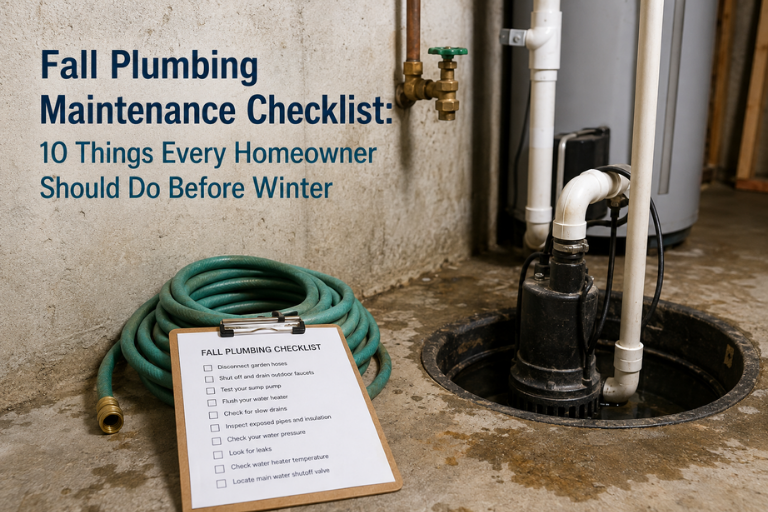
☐ Disconnect garden hoses
☐ Shut off and drain outdoor faucets
☐ Test your sump pump
☐ Consider flushing your water heater
☐ Check for slow drains
☐ Inspect exposed pipes and insulation
☐ Check your water pressure
☐ Look for leaks
☐ Check your water heater temperature
☐ Locate your main water shutoff valve
Taking care of these tasks in late August, September, or early October can help you identify plumbing problems before freezing temperatures arrive.
And if you find a problem you can't safely or confidently address yourself, it's better to have it inspected before it becomes a winter plumbing emergency.
Need Help Getting Your Plumbing Ready for Winter?
A fall plumbing inspection can identify potential problems before they turn into expensive repairs. From outdoor faucets and sump pumps to water heaters, pipes, and drains, getting ahead of small problems now can give you greater peace of mind when winter arrives.
Don't wait for the first hard freeze to discover a plumbing problem.