

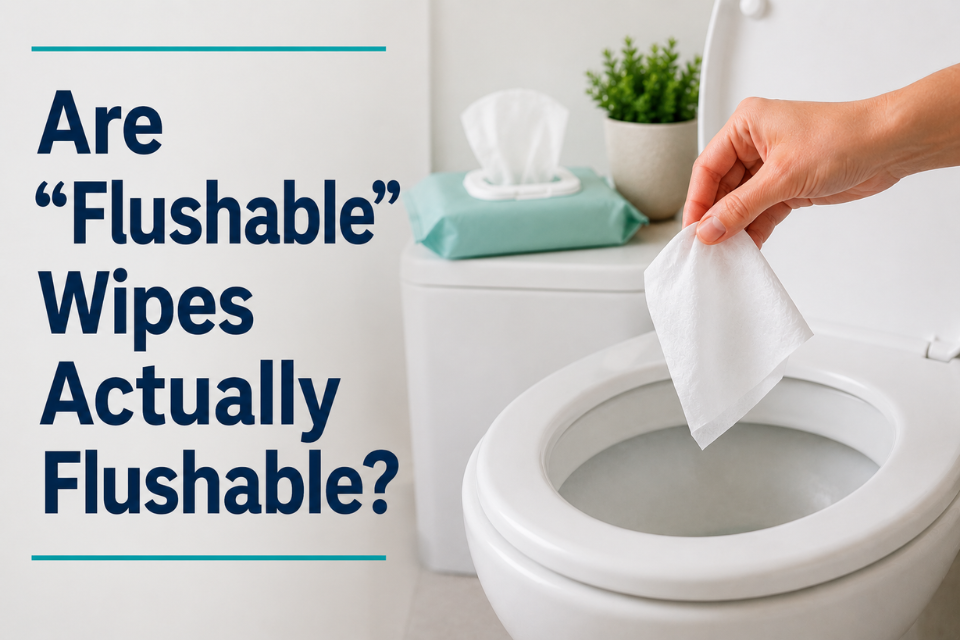
Many homeowners assume that products labeled “flushable” are safe for their plumbing systems. After all, if it says flushable on the package, it should break down just like toilet paper—right? Unfortunately, that’s not the case. Despite the marketing claims, most “flushable” wipes do not dissolve properly in water and can create serious plumbing and sewer issues.
The Truth About “Flushable” Wipes
Unlike toilet paper, which is specifically designed to break apart quickly once it hits water, flushable wipes are made to be durable. That strength may make them convenient to use, but it also means they stay intact long after being flushed.
- They don’t break down easily
Wipes are made with strong fibers that resist tearing, even after extended time in water. - They can accumulate in pipes
Instead of dissolving, wipes can catch on rough spots or bends in your plumbing and begin forming a blockage. - They combine with other debris
Grease, hair, and other materials can stick to wipes, creating larger and more stubborn clogs. - They contribute to sewer system problems
Municipal systems often deal with massive blockages—sometimes called “fatbergs”—made up largely of wipes and grease.
How Flushable Wipes Affect Your Home
Flushing wipes might not cause an immediate problem, but over time, the damage can build up.
- Frequent toilet or drain backups
- Slow draining fixtures throughout the home
- Sewage odors or gurgling sounds
- Costly plumbing repairs or sewer line cleaning
If your home uses a septic system, the risks are even higher. Wipes can disrupt the natural breakdown process inside the tank and lead to premature failure.
What You Should Do Instead
To protect your plumbing system and avoid unnecessary repairs, it’s best to treat wipes as non-flushable—no matter what the label says.
- Dispose of wipes in the trash
- Only flush toilet paper and human waste
- Use septic-safe practices if applicable
- Install a bathroom trash can for convenience
Final Thoughts
While “flushable” wipes may seem like a convenient option, they can cause significant damage to your plumbing and local sewer systems. The safest approach is simple: don’t flush them. Sticking to toilet paper and proper disposal habits will help keep your drains clear and your plumbing system running smoothly for years to come.