

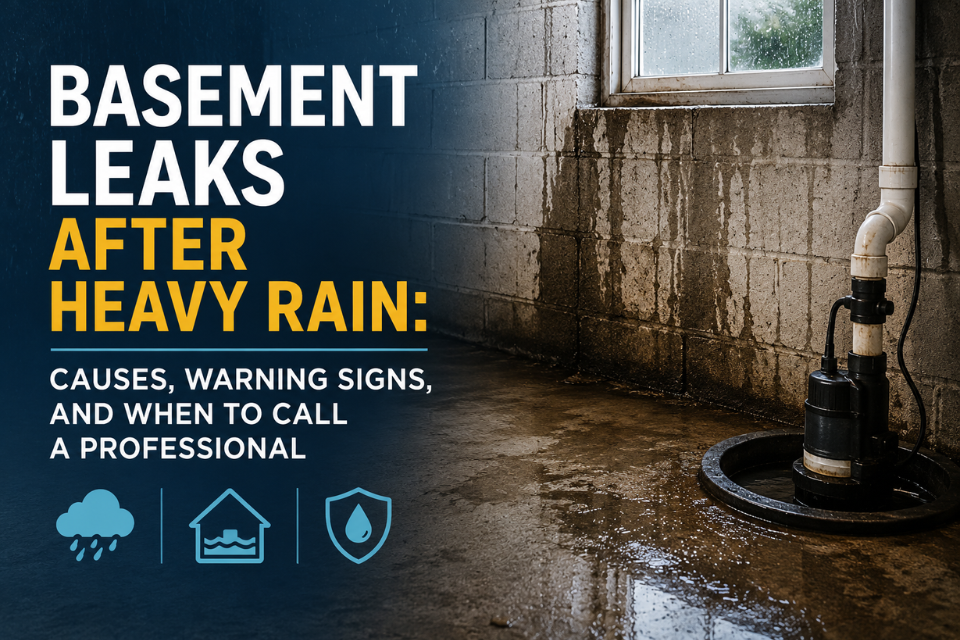
A heavy summer rainstorm can quickly reveal problems that were hiding around your home. Many homeowners discover water in their basement only after a major downpour — a damp corner, water along the basement walls, or that familiar musty smell that wasn’t there before.
While a small amount of moisture may seem harmless, basement leaks can quickly turn into bigger problems, including mold growth, damaged flooring, ruined belongings, and even foundation issues.
Understanding where basement water comes from is the first step toward preventing costly damage.
Why Does My Basement Leak After It Rains?
Basement water problems are usually caused by a combination of water buildup around your home, drainage issues, or a failure in your basement waterproofing system.
Some of the most common causes include:
1. Sump Pump Failure
Your sump pump plays a critical role in keeping groundwater from entering your basement. During heavy rain, water naturally collects around your foundation and flows into the sump pit, where the pump removes it from your home.
If the sump pump stops working, cannot keep up with the amount of water coming in, or loses power during a storm, your basement may flood quickly.
Common signs of sump pump problems include:
- Water pooling around the sump pit
- The pump running constantly
- Strange noises coming from the pump
- No water being discharged outside
- A basement that floods after storms
Tip: Test your sump pump before storm season. A pump that fails during a major rain event can allow gallons of water into your basement.
2. Foundation Cracks Allow Water to Enter
Even small foundation cracks can become pathways for water. As rain saturates the soil around your home, hydrostatic pressure increases and pushes water through weak areas in your foundation.
Signs that foundation cracks may be allowing water inside include:
- Water stains on basement walls
- Visible cracks in concrete or masonry
- Damp areas that appear after rainfall
- Water collecting along basement edges
Ignoring these leaks can allow moisture to continue damaging your basement over time.
3. Poor Exterior Drainage
Many basement leaks begin outside the home.
If rainwater is not directed away from your foundation, it can collect against your basement walls and eventually find a way inside.
Common exterior drainage problems include:
- Clogged gutters
- Downspouts draining too close to the foundation
- Soil grading that slopes toward the house
- Missing or damaged drainage systems
A properly maintained gutter and drainage system can prevent thousands of dollars in basement repairs.
Warning Signs Your Basement Has a Water Problem
Basement leaks are not always obvious. Sometimes the first signs are small and easy to overlook.
Watch for:
Damp Walls or Floors
Wet spots, discoloration, peeling paint, or damp concrete may indicate water is entering your basement.
Musty Odors
A musty smell often means excess moisture is present. Even if you cannot see water, hidden damp areas can create the perfect environment for mold growth.
Water Along Basement Edges
Water appearing where the floor meets the wall is a common sign of groundwater pressure or drainage issues.
Increased Humidity
A basement that feels unusually humid, sticky, or uncomfortable may have an underlying moisture problem.
Why Basement Leaks Should Be Addressed Quickly
A basement leak is more than just a cleanup issue.
Standing water and ongoing moisture can lead to:
- Mold and mildew growth
- Damaged drywall and flooring
- Wood rot
- Poor indoor air quality
- Damage to stored belongings
- More expensive repairs over time
The longer water remains in your basement, the greater the chance of permanent damage.
What Should You Do If Your Basement Leaks After Rain?
If you notice water in your basement after a storm:
- Find the source of the water if possible
- Check whether your sump pump is operating
- Remove standing water safely
- Move valuables away from wet areas
- Inspect gutters and downspouts outside
- Contact a professional if the problem continues
A recurring basement leak is usually a sign that the underlying cause needs to be corrected — not just cleaned up.
Prevent Basement Water Problems Before the Next Storm
Regular maintenance can help reduce your risk of basement flooding:
- Clean gutters regularly
- Make sure downspouts discharge away from your foundation
- Test your sump pump
- Consider a battery backup sump pump
- Monitor cracks or moisture changes in your basement
- Address drainage problems early
Need Help With Basement Water Problems?
If your basement leaks after rain, the problem may be caused by drainage issues, sump pump problems, or water entering around your foundation.
Addressing the cause early can help protect your home from mold, water damage, and costly repairs.
Contact Applause Plumbing & Heating for help diagnosing basement water issues and finding the right solution for your home.