

If you recently replaced your water heater — or you’re planning to — you may have heard your plumber mention something called an expansion tank.
Many homeowners in Easton, Phillipsburg, and the Lehigh Valley aren’t sure what it does… or whether they actually need one.
The truth? In many homes, an expansion tank isn’t optional — it’s necessary to protect your plumbing system and your new water heater.
What Is a Water Heater Expansion Tank?
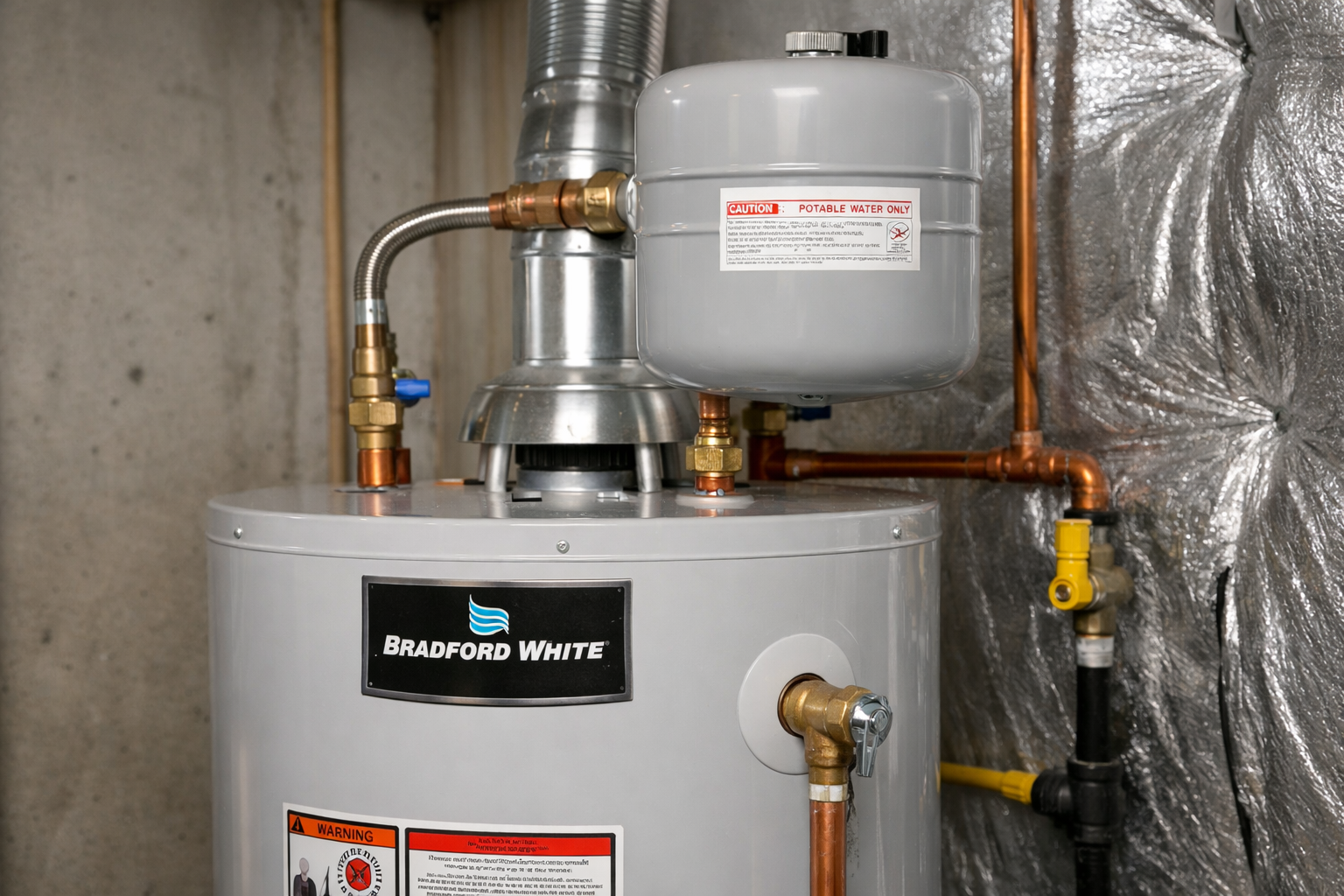
An expansion tank is a small secondary tank installed above your water heater. Its job is simple but critical:
When water heats up, it expands.
In older plumbing systems, that expanded water could flow back toward the municipal water supply. But modern plumbing systems are often closed systems — meaning that expanded water has nowhere to go.
Without an expansion tank, pressure builds inside your plumbing system.
Over time, that pressure can cause:
Leaking faucets
Running toilets
Premature water heater failure
Pipe joint leaks
Damage to appliances
Voided manufacturer warranties
An expansion tank absorbs that extra pressure before it becomes a problem.
When Is an Expansion Tank Required?
You likely need an expansion tank if your home has:
A pressure-reducing valve (PRV)
A backflow preventer or check valve
Consistently high water pressure
A newly installed water heater (many local plumbing codes now require one)
In many Pennsylvania and New Jersey homes, expansion tanks are now required when installing a new water heater.
If your installer skipped it, your system may not be properly protected.
What Happens Without One?
When there’s no expansion tank in a closed system, every heating cycle creates pressure spikes.
You may not notice it immediately, but over time you might see:
Dripping faucets
Relief valve discharge from the water heater
Banging or knocking pipes
Premature failure of the water heater tank
High pressure is one of the biggest silent killers of plumbing systems.
How Long Do Expansion Tanks Last?
Expansion tanks typically last 5–10 years.
Over time, the internal bladder can fail. When that happens, the tank fills with water completely and can no longer absorb pressure.
Signs your expansion tank may be failing:
The tank feels heavy or full of water
Water pressure fluctuates
You hear pipe banging
Visible rust or leaks near the tank
If your water heater is over 5 years old and has an expansion tank, it’s smart to have it checked during routine service.
Real Installation Example – Stewartsville, NJ
We recently installed a Bradford White water heater with a properly sized expansion tank for a homeowner in Stewartsville who was experiencing elevated water pressure.
Once installed and properly pressurized, the system stabilized and the pressure spikes were eliminated — protecting the new heater and the home’s plumbing fixtures.
Correct sizing and proper air pressure adjustment are critical. Simply “adding a tank” isn’t enough.
Do You Need an Expansion Tank Installed?
If you’re replacing your water heater or experiencing pressure-related plumbing issues, an expansion tank may be necessary to protect your investment.
At Applause Plumbing and Heating, we install properly sized and pressurized expansion tanks throughout:
Easton
Phillipsburg
Bethlehem
The Lehigh Valley
Warren County, NJ
If you're unsure whether your system needs one, we’re happy to evaluate it.
📞 Call 610-504-6688
Want to learn more about water heater performance and protection? Visit our Plumbing Blog for expert advice on common plumbing issues, fixture selection, and heating system improvements.