

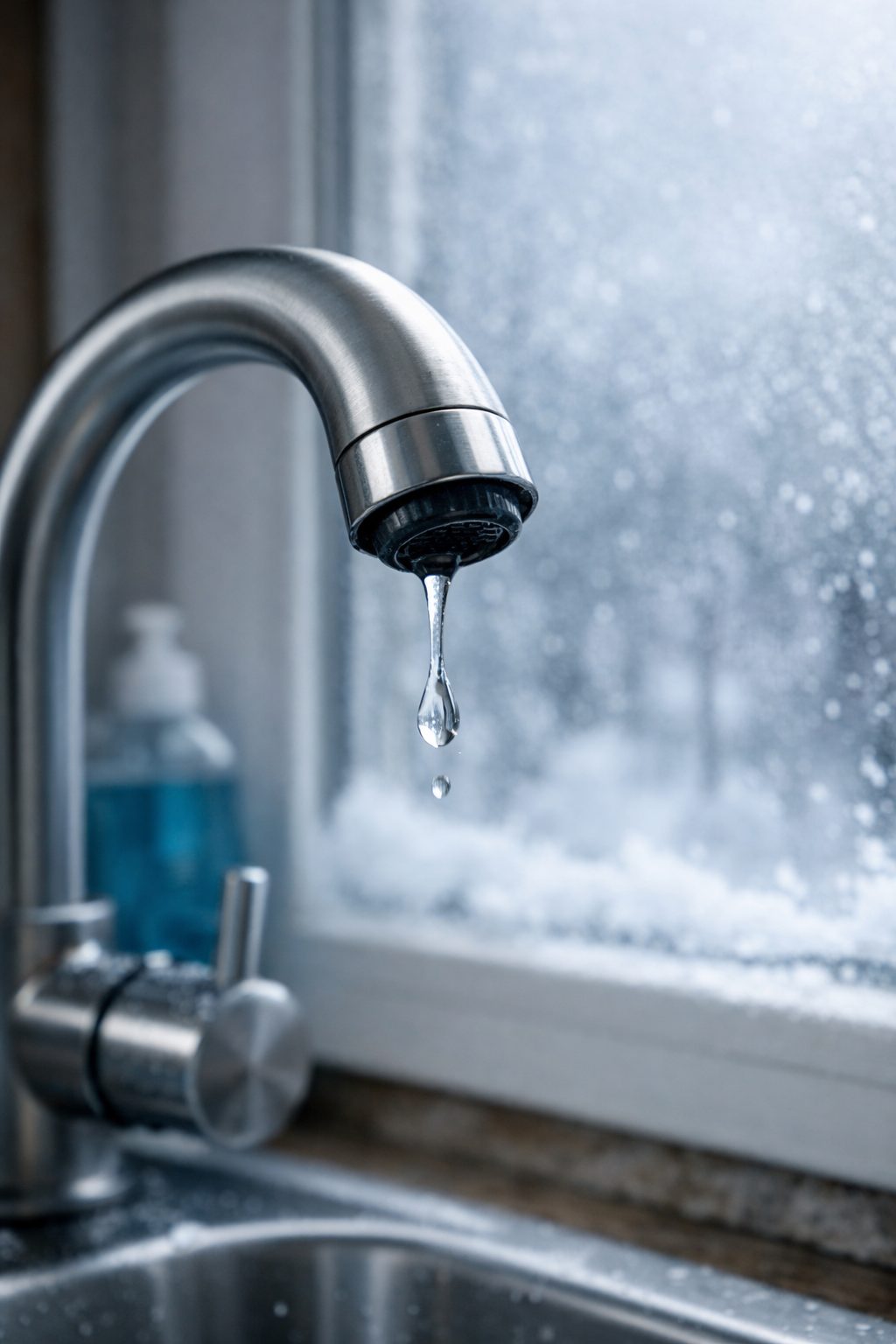
When temperatures plunge into the single digits—or worse, below zero—homeowners start hearing the same advice everywhere: "Drip your faucets so your pipes don’t freeze." But does dripping faucets in extreme cold really work, or is it just a plumbing myth?
With temperatures like -12°F and wind chills approaching -25°F, understanding what actually protects your plumbing can mean the difference between a minor inconvenience and thousands of dollars in water damage. Let’s break it down clearly.
Does Dripping Faucets Really Prevent Frozen Pipes?
Yes—dripping faucets can help, but only when done correctly and as part of a bigger freeze-prevention strategy.
Dripping works because it:
- Keeps water moving, making it harder to freeze
- Relieves pressure buildup if ice starts forming
- Slightly raises the freezing threshold inside the pipe
However, in extreme cold, dripping alone may not be enough—especially for pipes in exterior walls, crawl spaces, garages, or older homes.
How Much Should You Drip a Faucet?
This is where many homeowners get it wrong.
❌ A slow drip (one drop every few seconds)
Not enough in extreme cold. This can still allow pipes to freeze.
✅ A steady drip or small stream
- About the thickness of a pencil lead
- Roughly 1–2 drops per second, or a very thin stream
- Enough to keep water flowing without wasting excessive water
💡 Tip: If you hear a consistent tapping sound in the sink, you’re usually dripping enough.
Hot vs. Cold Water: Which One Should You Drip?
This surprises a lot of people.
👉 Drip both hot AND cold when possible
Why?
- Hot and cold lines are separate pipes
- Cold water freezes faster, but hot water pipes freeze too
- Hot water lines often run through exterior walls
If you can only drip one:
- Drip the cold water line first
- Especially during overnight lows or power outages
Which Faucets Matter Most?
Not all faucets are equally at risk. Focus on these first:
🚨 Highest-Risk Faucets
- Faucets on exterior walls
- Kitchen sinks (often on outside walls)
- Bathroom sinks near exterior corners
- Laundry sinks in basements or garages
- Any faucet with plumbing near crawl spaces
Lower Risk (but still important)
- Interior bathrooms
- Upper-floor sinks away from exterior walls
💡 Pro tip: Open the cabinet doors under sinks to allow warm air to circulate around the pipes.
When Dripping Faucets Is NOT Enough
Dripping faucets may fail when:
- Temperatures stay below 0°F for extended periods
- Wind chills drive cold air into walls
- Pipes are poorly insulated
- The home has a history of frozen pipes
- Heat is turned down too low or shut off
In these cases, additional steps are critical:
- Increase thermostat temperature slightly
- Use pipe insulation or heat tape
- Seal drafts near plumbing walls
- Disconnect hoses and shut off outdoor lines
Signs a Pipe May Already Be Frozen
Watch for these warning signs:
- Little or no water coming from a faucet
- Frost on exposed pipes
- Strange smells from drains
- One faucet not working while others do
⚠️ Important: Pipes often burst after they thaw—not while frozen.
What NOT to Do If Pipes Freeze
Avoid these common mistakes:
- ❌ Using open flames to thaw pipes
- ❌ Cranking water pressure suddenly
- ❌ Ignoring slow or stopped water flow
Instead, gently warm the area and call a professional if you’re unsure.
The Bottom Line
Dripping faucets does help during extreme cold—but it’s not a guarantee.
Think of it as one layer of protection, not the only solution. In temperatures like -12°F to -25°F, a combination of dripping faucets, proper insulation, cabinet airflow, and consistent heat is the best way to protect your plumbing.
If you’re dealing with frozen pipes, low water pressure, or want to winter-proof your home before the next cold snap, professional help can save you from costly damage.
Applause Plumbing and Heating proudly serves homeowners in Easton, Nazareth, the Lehigh Valley, and Warren County, NJ.