

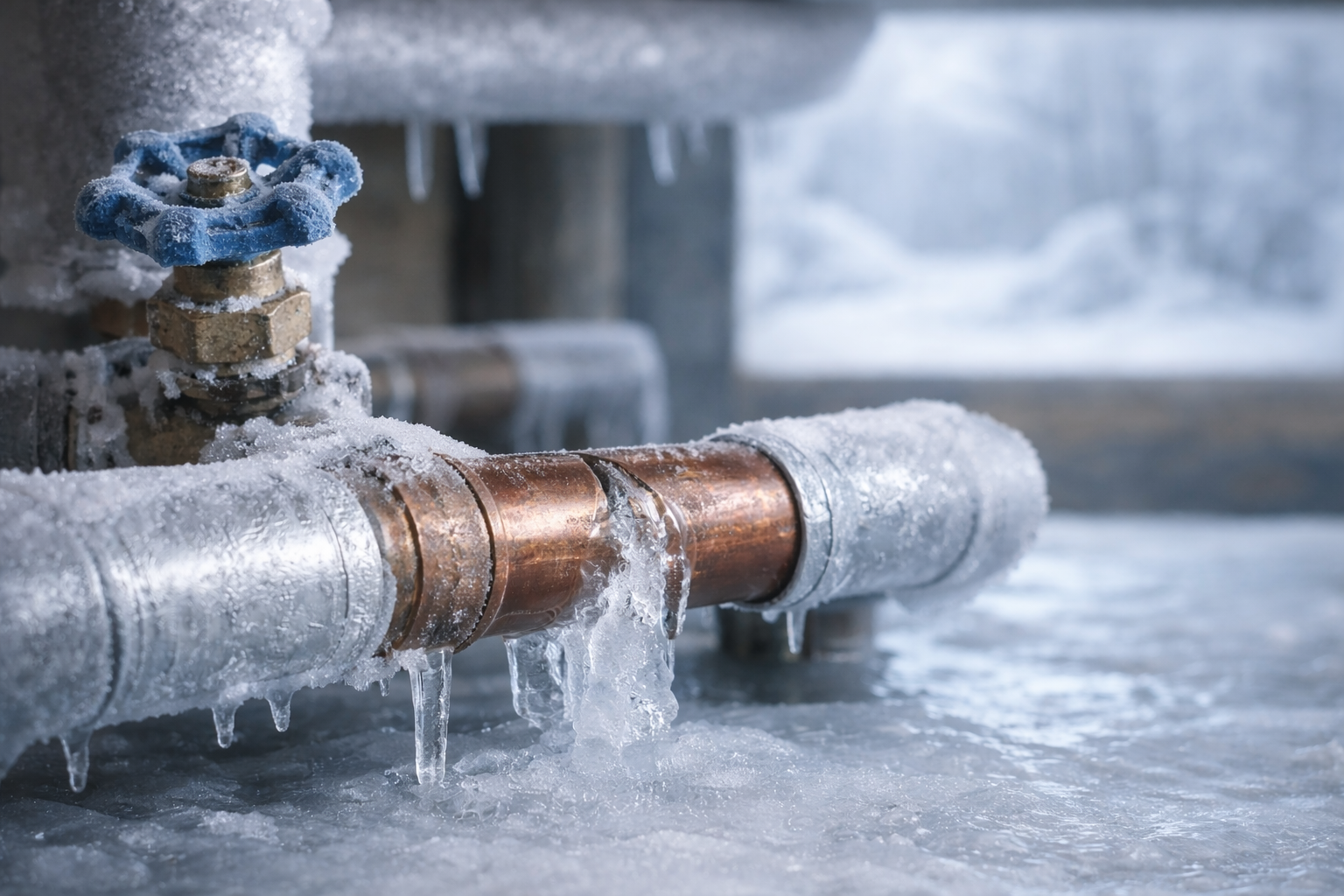
Frozen pipes are one of the most common cold-weather plumbing problems homeowners face, especially during periods of prolonged sub-zero temperatures. When water inside a pipe freezes, it expands, placing intense pressure on the pipe walls. This pressure can cause cracks or full ruptures, often remaining hidden until temperatures rise and the ice melts. At that point, homeowners may suddenly experience leaks, flooding, or water damage that seems to appear without warning.
Pipes are most vulnerable to freezing when they are located in unheated or poorly insulated areas of a home. Common trouble spots include basements, crawl spaces, attics, garages, exterior walls, and areas near foundation penetrations. Even homes with modern plumbing systems can experience frozen pipes if cold air is allowed to circulate around supply lines or if interior temperatures drop too low during extreme weather events.
One of the earliest signs of a frozen pipe is reduced or completely stopped water flow from a faucet. In some cases, frost may be visible on exposed piping, or unusual sounds may occur when attempting to use plumbing fixtures. Frozen pipes do not always burst immediately, which can create a false sense of security. Damage often occurs during thawing, when pressurized water pushes through weakened sections of pipe that were compromised while frozen.
Preventing frozen pipes largely comes down to maintaining consistent indoor temperatures and minimizing exposure to cold air. Keeping thermostats set to a steady temperature, even overnight or during short absences, helps reduce risk. Allowing warm air to circulate freely around plumbing by opening cabinet doors beneath sinks can also make a difference. In particularly cold conditions, a slow drip from faucets connected to vulnerable pipes may help prevent freezing by keeping water moving through the system.
Insulation plays a critical role in protecting plumbing during winter months. Pipes located near exterior walls or in unconditioned spaces benefit greatly from proper insulation, which helps retain heat and reduce temperature fluctuations. Sealing gaps, cracks, or openings around pipe penetrations can also limit cold air intrusion and improve overall energy efficiency in the home.
If a pipe is suspected to be frozen, it is important to proceed cautiously. Attempting to force water through a frozen pipe can increase pressure and worsen damage. Gentle warming methods, such as raising indoor temperatures or carefully applying warmth to exposed sections of pipe, are generally safer approaches. Open flames or high-heat devices should be avoided, as they pose fire risks and can damage plumbing materials.
Frozen pipes are not just an inconvenience; they can lead to significant property damage if not addressed promptly. Water damage from burst pipes can affect flooring, drywall, cabinetry, and personal belongings, often requiring extensive repairs. For this reason, understanding the causes and prevention of frozen pipes is an important part of winter home maintenance, even for homeowners who have never experienced the issue before.
Extreme cold events have become more unpredictable in recent years, making frozen pipe awareness increasingly relevant across a wider range of climates. Homes that may not have been designed for sustained freezing temperatures can still be affected when unusual weather patterns occur. Taking preventive steps and understanding how frozen pipes develop can help homeowners reduce risk and protect their plumbing systems during harsh winter conditions.