

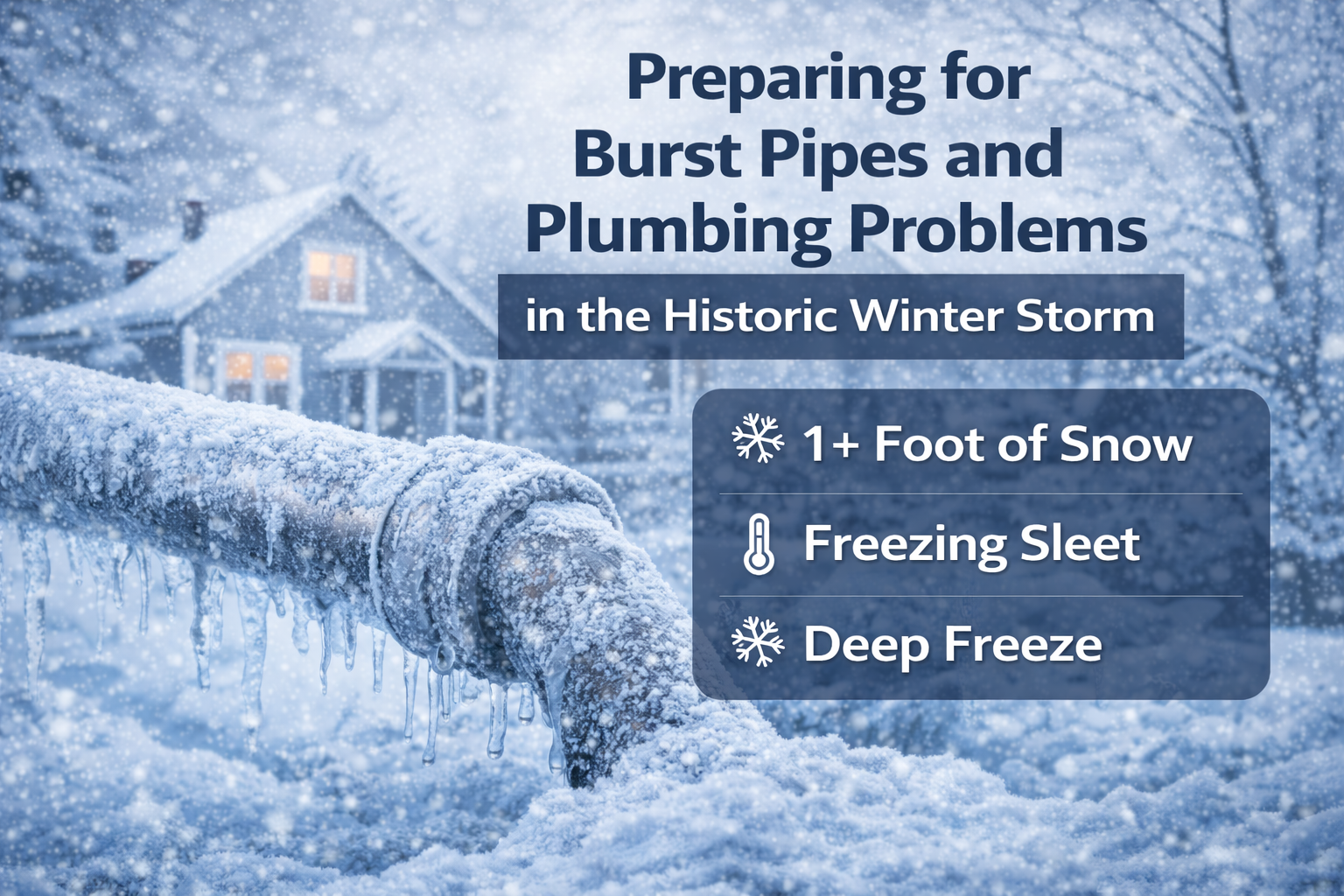
This January, our region is facing a historic winter storm — with over a foot of snow expected, followed by sleet and dangerously cold temperatures. While snowstorms are nothing new, this combination of heavy snowfall, ice, and prolonged cold creates a perfect storm for plumbing problems.
Frozen and burst pipes aren’t just an inconvenience — they can cause extensive damage in a very short amount of time. Understanding why this type of storm is so risky can help you protect your home before issues start.
Why Snow Followed by Sleet Is Especially Hard on Plumbing
Heavy snow acts like insulation on the ground, but sleet and ice change the game:
- Snow melts slightly, then refreezes as sleet
- Ice builds up around foundations, hose bibs, and exterior walls
- Water gets trapped in small openings and freezes repeatedly
This freeze–thaw cycle increases pressure inside pipes and fittings, making cracks and bursts more likely — even in homes that usually handle winter well.
Plumbing Risks During a Major Winter Storm
During storms like this, we commonly see:
- Frozen pipes in exterior walls and unheated areas
- Burst pipes after thawing begins
- Failed hose bibs and outdoor shutoffs
- Sump pump issues from melting snow and ice
- Water damage discovered days later
Many of these problems don’t show up until temperatures rise — when it’s already too late.
Storm-Focused Steps to Protect Your Plumbing Right Now
If you haven’t prepared yet, focus on these storm-specific actions:
1. Stabilize Indoor Temperatures
Avoid large temperature swings. Keeping your home consistently warm is more important than saving a few dollars on heat during extreme cold.
2. Protect Against Ice Build-Up
Clear snow away from:
- Exterior hose bibs
- Foundation vents
- Basement window wells
This reduces ice formation where pipes enter your home.
3. Watch Low-Use Bathrooms and Fixtures
Guest bathrooms and rarely used sinks freeze first. Run water briefly a few times a day to keep lines active.
4. Be Ready for the Thaw
Have towels, a bucket, and your main shutoff location ready. Many pipe failures happen after the storm, when ice begins to melt.
Warning Signs During and After the Storm
Call a plumber if you notice:
- No water or reduced pressure at certain fixtures
- Sounds of dripping behind walls
- Water stains on ceilings or drywall
- Musty or sewer-like odors
These are often early signs of a frozen or cracked pipe.
When Heating and Plumbing Problems Overlap
If your heat struggles or shuts down during a storm like this, plumbing damage can occur within hours — especially overnight. Heating issues quickly become plumbing emergencies in extreme weather.
Local, Storm-Ready Plumbing Support
Historic storms demand fast action and local experience. If you’re concerned about frozen pipes, ice-related damage, or want help preparing your home during this extreme weather, we’re here for our community.
Don’t wait until melting snow turns into water damage. A quick check now can prevent a major repair later.