

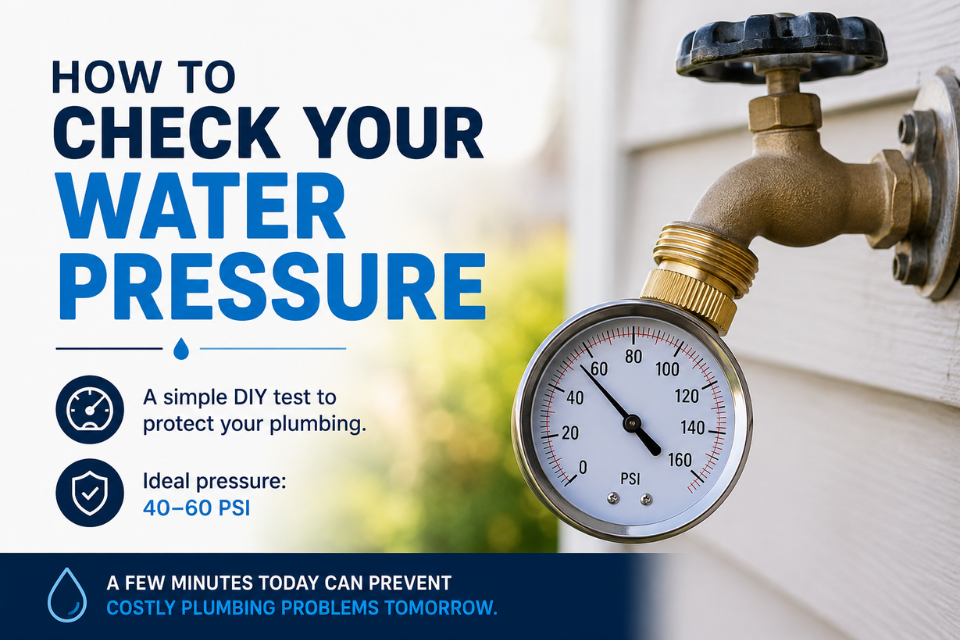
Water pressure plays a huge role in your home’s plumbing system. If it’s too low, everyday tasks like showering and washing dishes become frustrating. If it’s too high, it can quietly damage your pipes, fixtures, and appliances—leading to costly repairs down the road.
The good news? You can easily check your home’s water pressure yourself in just a few minutes.
Why Water Pressure Matters
Proper water pressure keeps your plumbing system running efficiently and safely. Most homes should have water pressure between 40 and 60 PSI (pounds per square inch).
- Too low (<40 PSI): Weak showers, slow-filling appliances
- Too high (>80 PSI): Can damage pipes, cause leaks, and shorten appliance lifespan
What You’ll Need
- A water pressure gauge (inexpensive and available at most hardware stores)
Step-by-Step: How to Check Your Water Pressure
1. Find a Hose Bib
Locate an outdoor spigot (hose bib) or a laundry sink faucet. These are ideal because they provide a direct reading of your home’s water pressure.
2. Attach the Gauge
Screw the water pressure gauge onto the spigot. Make sure it’s snug so no water leaks out.
3. Turn Off All Water
Before testing, ensure no water is running inside or outside your home. This includes:
- Faucets
- Washing machines
- Dishwashers
- Sprinklers
This ensures you get an accurate reading.
4. Turn the Faucet On Fully
Open the spigot all the way and let the water flow into the gauge.
5. Read the Gauge
Check the needle on the gauge to see your home’s water pressure reading.
What Your Results Mean
- 40–60 PSI: Ideal range — your system is in good shape
- 60–80 PSI: Acceptable, but slightly high — monitor over time
- Above 80 PSI: Too high — consider installing or adjusting a pressure-reducing valve (PRV)
- Below 40 PSI: Too low — could indicate a blockage, leak, or supply issue
When to Call a Professional
If your pressure is outside the normal range or fluctuates frequently, it’s best to have a professional take a look. High pressure can silently damage your plumbing, while low pressure may point to hidden issues.
Pro Tip
If your home has a pressure-reducing valve (PRV), it may need adjustment or replacement over time. Many homeowners don’t realize these can wear out and fail—causing pressure to creep up dangerously.
Need Help?
If you're unsure about your results or want peace of mind, a licensed plumber can test your system, inspect your PRV, and make sure everything is operating safely.
Keeping an eye on your water pressure is a simple step that can prevent major plumbing problems. With just a $10–$15 gauge and a few minutes of your time, you can protect your home and avoid expensive repairs.