

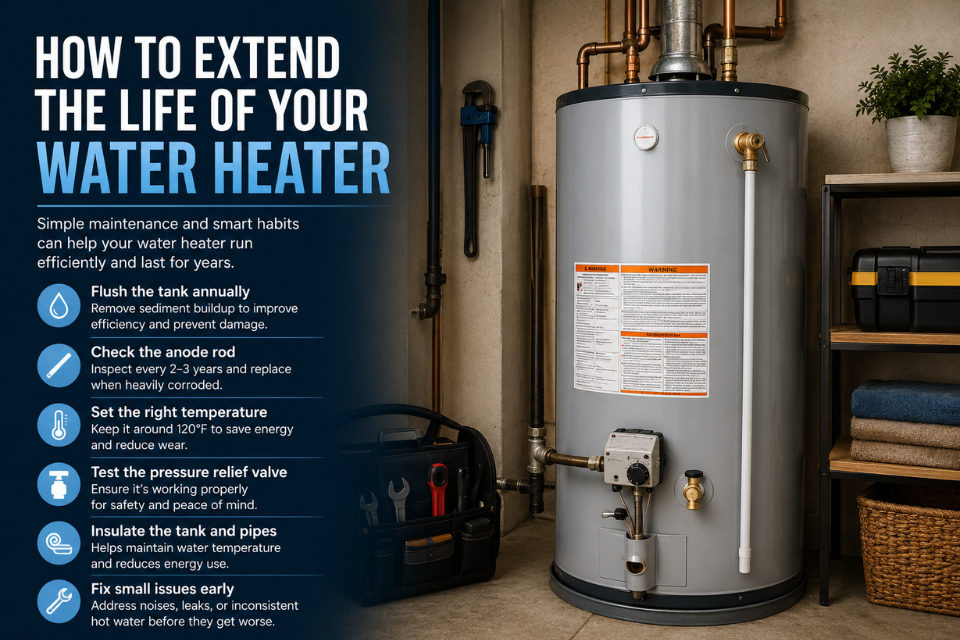
A water heater is one of the hardest-working appliances in your home. Whether you’re taking showers, washing dishes, or doing laundry, it’s constantly in use—often without much thought. But like any major system, it requires proper care to perform efficiently and last as long as possible. The good news is that with a few simple habits and some routine maintenance, you can significantly extend the life of your water heater and avoid costly breakdowns.
Most traditional tank water heaters last anywhere from 8 to 12 years, but neglect can shorten that lifespan dramatically. On the other hand, proactive maintenance can help you get the most value out of your investment while also improving performance and energy efficiency.
Why water heater maintenance matters
Over time, sediment, minerals, and wear-and-tear take a toll on your water heater. As sediment builds up inside the tank, it creates a barrier between the burner (or heating element) and the water. This forces the system to work harder, increasing energy usage and accelerating damage.
Additionally, corrosion inside the tank can lead to leaks, which often result in full system replacement rather than repair. Regular maintenance helps prevent these issues before they become serious problems.
Simple ways to extend the life of your water heater
Taking care of your water heater doesn’t have to be complicated. Here are some of the most effective ways to keep it running longer:
- Flush the tank annually
Over time, sediment from minerals in your water settles at the bottom of the tank. Flushing the system once a year helps remove this buildup, improving efficiency and reducing strain on the unit. - Check the anode rod
The anode rod is a metal component inside the tank designed to attract corrosive elements, protecting the tank itself from rust. It typically needs to be inspected every 2–3 years and replaced when heavily corroded. - Adjust the temperature setting
Keeping your water heater set to around 120°F is ideal. Higher temperatures can increase wear on the system and raise energy costs, while also posing a scalding risk. - Install a water softener (if needed)
If you have hard water, mineral buildup will occur more quickly. A water softener can significantly reduce sediment accumulation and extend the life of your unit. - Test the pressure relief valve
The temperature and pressure (T&P) relief valve is a critical safety feature. Testing it periodically ensures it’s functioning properly and prevents dangerous pressure buildup inside the tank. - Insulate the tank and pipes
Adding insulation helps maintain water temperature, reducing how often the system has to reheat water. Less cycling means less wear over time. - Fix small issues early
Strange noises, inconsistent water temperature, or reduced hot water supply are all early warning signs. Addressing these issues quickly can prevent larger, more expensive problems.
Signs your water heater may be wearing out
Even with proper care, no water heater lasts forever. Recognizing the signs of a failing system can help you plan ahead and avoid sudden loss of hot water:
- Rust-colored water coming from hot taps
- Rumbling or popping noises from the tank
- Water pooling around the base of the unit
- Inconsistent or insufficient hot water
- Increasing energy bills without explanation
If you notice any of these issues, it may be time for a professional inspection or to start considering replacement options.
Tank vs. tankless lifespan
It’s worth noting that tankless water heaters typically last longer than traditional tank models—often up to 20 years with proper maintenance. However, they still require regular descaling and servicing, especially in areas with hard water.
The long-term payoff
Extending the life of your water heater isn’t just about avoiding replacement costs—it’s also about efficiency, reliability, and peace of mind. A well-maintained system uses less energy, delivers consistent hot water, and is far less likely to fail when you need it most.
In the end, a little maintenance goes a long way. By staying proactive and addressing small issues early, you can keep your water heater running smoothly for years to come while protecting your home and your budget.