

Nothing is more frustrating than turning on your faucet or shower and discovering low water pressure. It slows down your morning routine, makes washing dishes harder, and can even affect your water heater’s performance. Fortunately, there are several DIY fixes you can try before calling a professional plumber.
In this guide, we’ll walk you through the most common causes of low water pressure, simple solutions you can tackle yourself, and signs it’s time to call an expert.
1. Check and Clean Your Faucet Aerators and Showerheads
Mineral deposits from hard water can build up over time, clogging your aerators and showerheads. This reduces water flow and pressure.
DIY Fix:
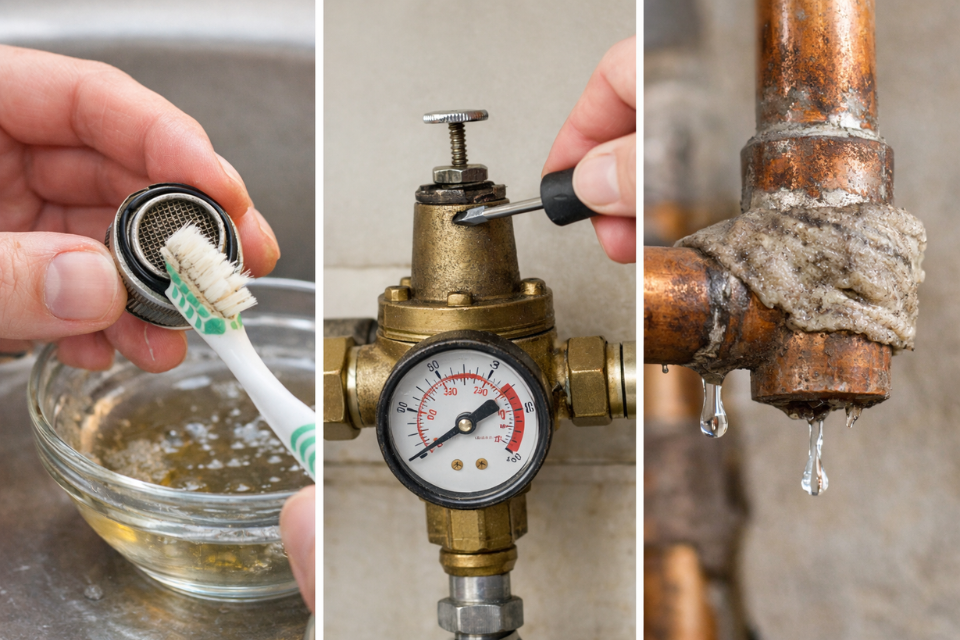
- Unscrew the aerator or showerhead.
- Soak it in vinegar overnight to break down mineral deposits.
- Scrub gently with a toothbrush.
- Rinse and reattach.
💡 Tip: If cleaning doesn’t help, replace old aerators with high-flow versions to improve water pressure.
(Include a photo or diagram showing how to remove and clean a faucet aerator.)
2. Fully Open Your Main Water Shut-Off Valve
Your home’s main water valve controls the flow of water to your entire plumbing system. If it’s not fully open, you may notice low pressure throughout your home.
DIY Fix:
- Locate your main water shut-off valve (usually near the water meter).
- Turn the valve counterclockwise until it stops.
💡 Tip: If you have a gate valve that is hard to turn, use caution or call a plumber—forcing it can cause leaks.
3. Inspect Your Pressure Regulator
Many homes have a pressure regulator installed where the main water line enters the house. A malfunctioning regulator can lower water pressure unexpectedly.
DIY Fix:
- Test your water pressure with a pressure gauge (available at hardware stores).
- Normal residential water pressure is typically 40–60 PSI.
- If it’s too low, you may need to adjust or replace the regulator.
⚠️ When to call a pro: Replacing a pressure regulator involves shutting off water to your home—if you’re unsure, contact a licensed plumber.
(Include a diagram showing the location of a pressure regulator on a main water line.)
4. Look for Leaking Pipes
Leaks divert water away from your fixtures, causing noticeable drops in pressure.
DIY Fix:
- Check for wet spots, water stains, or unusual puddles near pipes.
- Tighten minor visible connections if safe to do so.
⚠️ When to call a pro: If you suspect hidden leaks behind walls or under floors, a professional plumber can locate and repair them safely.
(Include a photo of a typical visible pipe leak.)
5. Flush Your Pipes to Remove Sediment Buildup
Over time, rust, dirt, and mineral deposits can accumulate inside pipes, restricting water flow—especially in older homes.
DIY Fix:
- For a single faucet, try cleaning the aerator or faucet cartridge.
- For whole-house low pressure, a plumber can flush the pipes to remove sediment.
6. Check Your Water Heater
If your hot water pressure is low, the issue may be with your water heater. Sediment buildup or partially closed valves can reduce flow.
DIY Fix:
- Make sure the water heater’s shut-off valve is fully open.
- If sediment buildup is suspected, schedule a professional water heater flush.
7. Consider Municipal Water Supply Issues
Sometimes, low water pressure isn’t your fault—it could be due to city water supply maintenance or nearby construction.
DIY Fix:
- Ask neighbors if they’re experiencing similar issues.
- Contact your local water department to confirm if there are temporary pressure drops.
When to Call a Professional Plumber
While many low water pressure issues are easy to fix yourself, it’s time to call a plumber if:
- You’ve tried DIY fixes and pressure remains low.
- Leaks are hidden or extensive.
- Your water heater is old or showing signs of failure.
- Your pressure regulator needs replacement and you’re not comfortable doing it.
A licensed plumber can accurately diagnose the problem, ensure repairs comply with local codes, and prevent further damage to your plumbing system.
Need Expert Plumbing Help?
If you’ve tried these solutions and still struggle with low water pressure, Applause Plumbing & Heating can help. We specialize in diagnosing and fixing water pressure issues, water heater problems, and more.
📞 Call us today for professional plumbing services in Nazareth, Easton, Phillipsburg, and across the Lehigh Valley!