

If you’re like most homeowners, you probably don’t think about your water heater until something goes wrong. But one of the most common questions people ask—especially when they start noticing issues—is: how long do hot water heaters actually last?
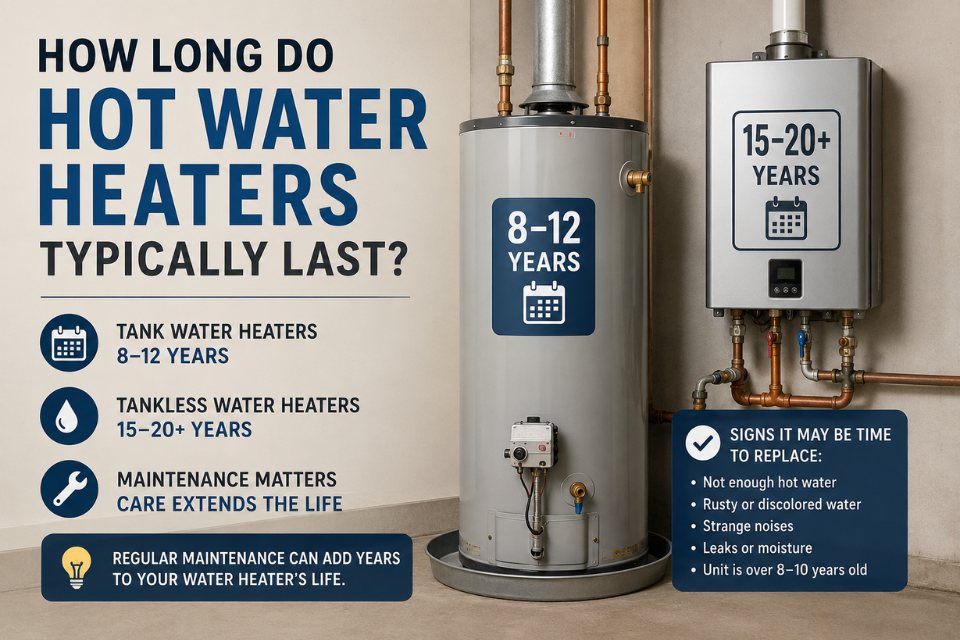
The honest answer is that it depends on the type of system you have, how it’s maintained, and even the quality of your local water. In general, though, most traditional tank-style water heaters last between 8 and 12 years. Some may fail earlier, especially without maintenance, while others can stretch a bit longer with proper care. If your unit is creeping past the 10-year mark, it’s usually wise to start planning ahead rather than waiting for a surprise leak.
Tankless water heaters tend to last longer. Because they don’t store water continuously, they experience less internal corrosion over time. It’s not uncommon for a tankless system to last 15 to 20 years or more, especially if it’s flushed and serviced regularly. That longer lifespan is one of the reasons some homeowners choose to upgrade, even though the upfront cost is higher.
What many people don’t realize is that water heaters often don’t fail all at once—there are usually warning signs. You might notice your hot water running out faster than usual, strange popping or rumbling noises from the tank, rusty or discolored water, or even small leaks forming near the bottom. These are all indicators that the internal components are wearing down. In tank-style heaters, the inside of the tank slowly corrodes over time, and once that lining is compromised, failure can happen quickly.
Your local water quality plays a big role too. In areas with hard water—like much of Pennsylvania and New Jersey—minerals build up inside the tank, causing sediment to form at the bottom. This buildup makes the heater work harder, reduces efficiency, and can significantly shorten its lifespan if it isn’t flushed out periodically.
Maintenance can make a bigger difference than most homeowners expect. A simple annual flush to remove sediment, along with checking the anode rod (a component designed to prevent rust inside the tank), can add years to the life of your system. Unfortunately, this is often overlooked, which is why many units fail closer to the lower end of that 8–12 year range.
Another factor to consider is where your water heater is located. If it’s in a basement with a floor drain, a failure might be inconvenient but manageable. But if it’s on a second floor or in a finished area, a leaking tank can cause serious water damage. That’s why many professionals recommend not pushing a tank-style heater too far past its expected lifespan—replacement is often cheaper than dealing with a flooded home.
At Applause Plumbing and Heating, we often tell homeowners this: don’t wait for your water heater to fail completely. If your unit is over 8–10 years old and starting to show signs of wear, it’s a good time to have it evaluated. Planning ahead gives you options, instead of dealing with an emergency replacement when you suddenly have no hot water.
So, how long do hot water heaters typically last? For most homes, you can expect around a decade from a traditional tank system, and significantly longer from a tankless unit—with proper care. The key is knowing where your system stands today, so you’re not caught off guard tomorrow.