

Choosing a water heater isn’t just about picking a 40‑ or 50‑gallon tank and hoping for the best. Proper sizing is a technical process that balances peak demand, recovery rate, incoming water temperature, and how your plumbing system is actually used in real life. At Applause Plumbing and Heating, we see many homeowners with water heaters that technically “work,” but are inefficient, undersized for modern fixtures, or oversized and wasting energy.
This article goes deeper than basic size charts. We’ll explain how professionals truly determine the right water heater size—and why two homes with the same number of people may need very different systems.
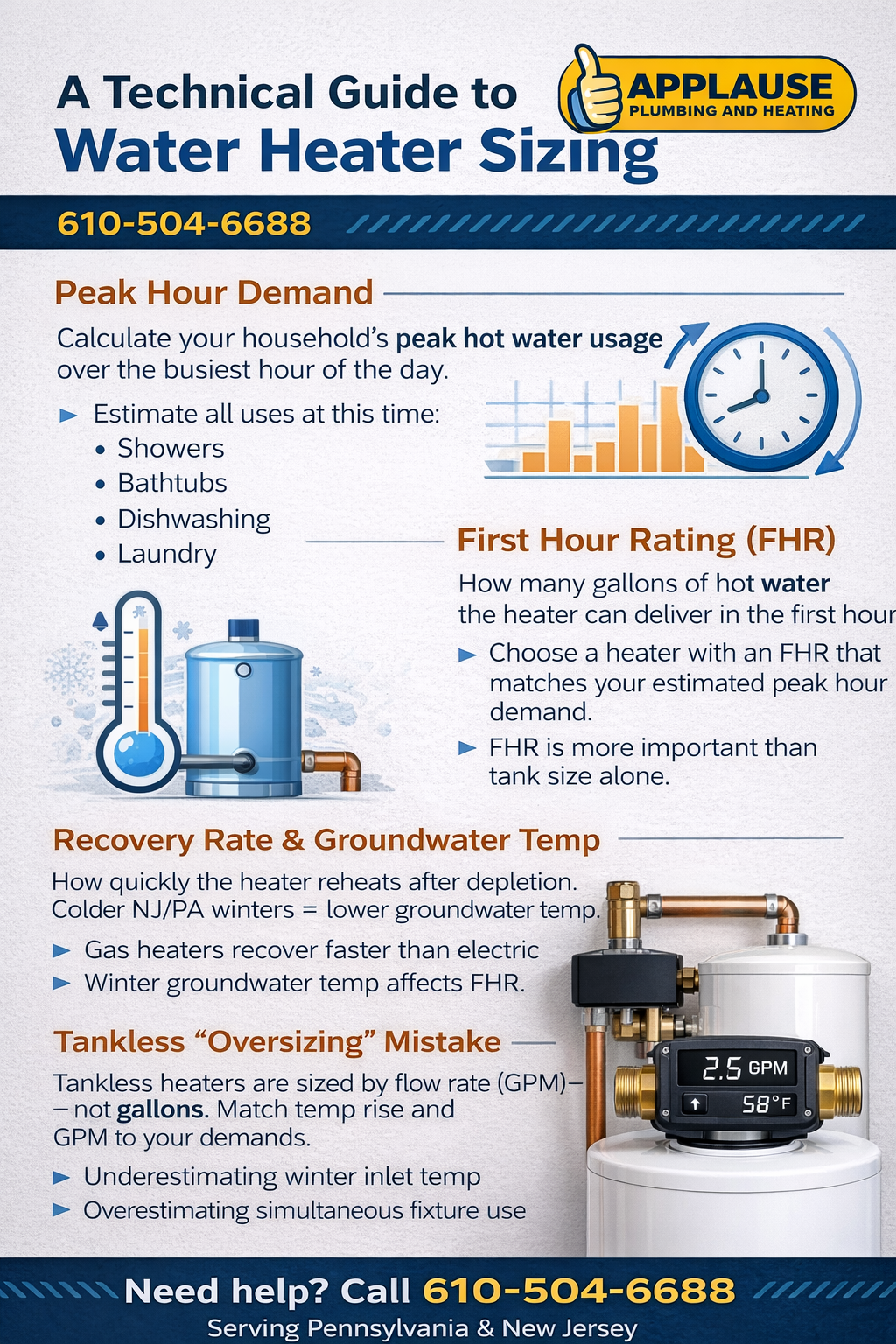
Understanding Peak Hour Demand (The Real Sizing Metric)
The most important concept in water heater sizing is peak hour demand—the maximum amount of hot water your household uses during its busiest one‑hour window. This typically occurs in the morning when showers, sinks, dishwashers, and laundry overlap.
Rather than counting people alone, plumbers calculate how many gallons of hot water are used simultaneously. A standard shower uses roughly 2–2.5 gallons per minute, meaning a single 10‑minute shower can consume 20–25 gallons of hot water. Add a dishwasher cycle or handwashing at the same time, and demand increases quickly.
This is why a family of three with back‑to‑back showers may need a larger system than a family of five that spaces water use throughout the day.
➡️ Brief Overview on How to Choose a Water Heater: Choosing the Right Size Water Heater for Your Home
First Hour Rating (FHR): Why Tank Size Alone Isn’t Enough
Tank capacity only tells part of the story. What truly matters is the First Hour Rating (FHR)—the amount of hot water a tank can supply in one hour starting with a full tank.
FHR combines two factors:
• Stored hot water • Recovery rate (how fast the heater reheats water)
A 40‑gallon gas water heater with a high recovery rate may outperform a 50‑gallon electric unit with slower recovery. Gas units generally heat water faster because burners deliver higher BTUs than electric elements.
This is why plumbers often recommend gas water heaters for homes with high simultaneous demand, even if tank size appears similar.
We recommend a licensed plumber to install the water heater.
Recovery Rate and Incoming Water Temperature
Recovery rate is directly affected by the temperature of the water entering your home. In Pennsylvania and New Jersey, groundwater temperatures fluctuate seasonally, often dropping significantly in winter. Colder incoming water requires more energy to reach the target temperature (usually around 120°F).
In winter months, an undersized system becomes more noticeable—longer wait times, lukewarm showers, or running out of hot water entirely. This is also why homeowners sometimes think their heater is “failing” when it’s actually just undersized for seasonal conditions.
Professional sizing accounts for regional groundwater temperature, not just household size.
Modern Fixtures Change the Math
High‑efficiency fixtures reduce water flow, but that doesn’t always reduce hot water demand. Multi‑head showers, rain heads, body sprays, and soaking tubs dramatically increase usage—even in energy‑efficient homes.
A single soaking tub can require 60–80 gallons of hot water for one fill. Without proper sizing, the tank may be fully depleted before the tub is halfway full.
Homes with luxury fixtures often require:
• Larger tank capacity • Higher BTU gas burners • Or a hybrid/tankless solution
Tankless Water Heaters: Flow Rate, Not Gallons
Tankless systems eliminate storage limitations but introduce a different sizing challenge: flow rate (GPM). Each fixture has a required flow rate, and the heater must handle the combined demand of all active fixtures.
For example:
Two showers (2.5 GPM each) plus a sink (1 GPM) equals 6 GPM demand. If incoming water is cold, the unit must be powerful enough to raise temperature at that flow rate—often requiring larger gas lines or electrical upgrades.
This is where many tankless installations fail when improperly sized. The unit may work fine until multiple fixtures run at once.
Oversizing vs. Undersizing: Both Cost You Money
Undersized water heaters lead to discomfort, increased wear, and homeowner frustration. Oversized systems create higher standby energy loss—constantly reheating water that isn’t being used.
Proper sizing finds the balance point where:
• Peak demand is met • Energy waste is minimized • Equipment lifespan is preserved
This balance is rarely achieved by guessing or using generic charts.
Why Professional Sizing Matters
A licensed plumber evaluates:
• Household usage patterns • Fixture types and flow rates • Fuel source and recovery capability • Local water temperature • Future home upgrades
At Applause Plumbing and Heating, we don’t just replace water heaters—we engineer solutions that fit your home’s real demand.
Final Thoughts
Water heater sizing is a technical decision that directly impacts comfort, efficiency, and operating cost. While basic charts are helpful starting points, true performance depends on peak demand, recovery rate, and how your home actually uses hot water.
If you’re experiencing inconsistent hot water—or planning a replacement—it’s worth having a professional assessment before choosing a new system.
Serving Pennsylvania & New Jersey Applause Plumbing and Heating proudly serves Easton, PA, the Lehigh Valley, and surrounding NJ communities. We specialize in properly sized, professionally installed water heating systems built for long‑term performance.
Contact us today to schedule an evaluation and get expert guidance tailored to your home.