

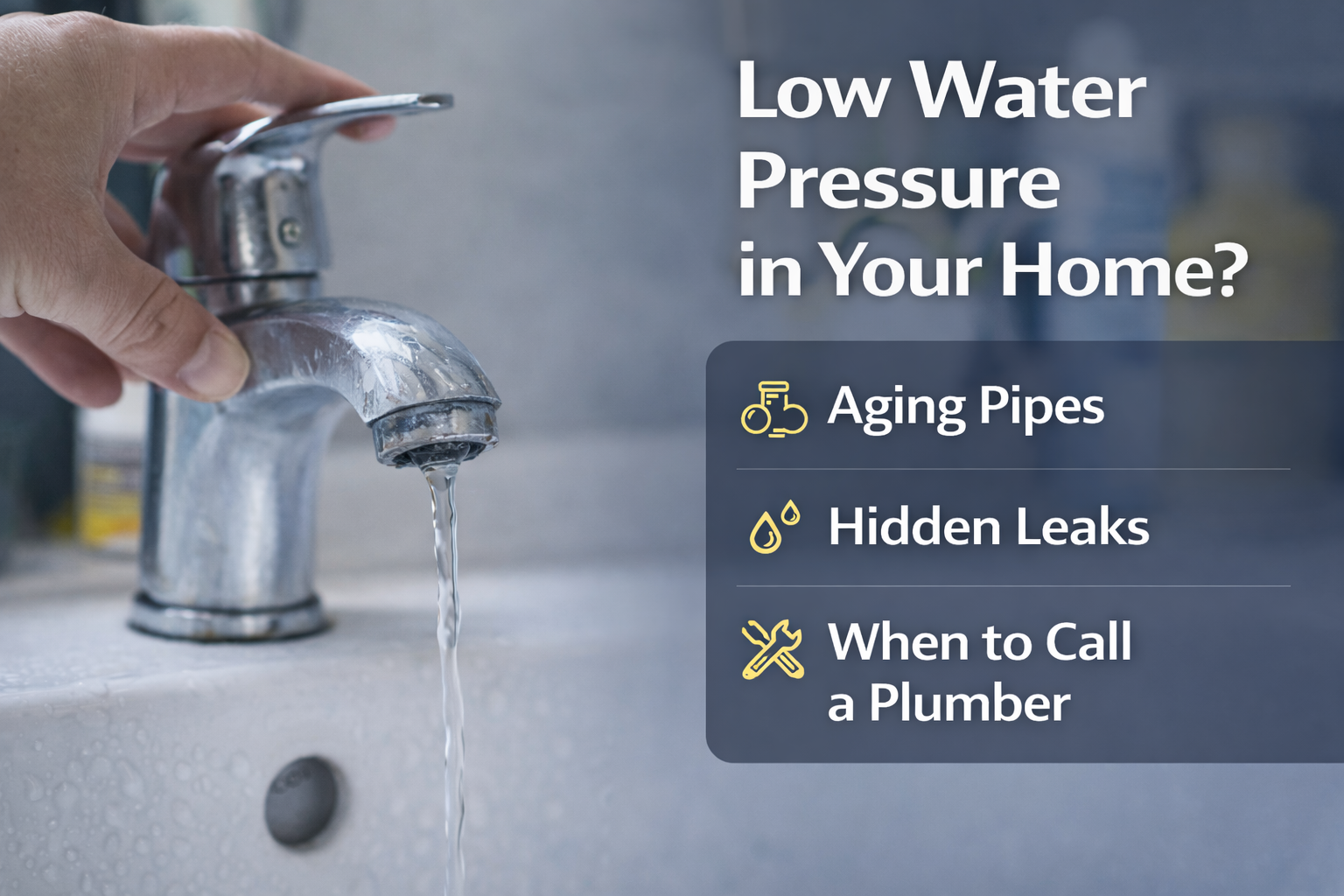
Low water pressure is one of the most frustrating plumbing issues homeowners deal with. Showers take longer, faucets feel weak, appliances struggle — and yet, nothing seems broken. Because it’s rarely an emergency, many people live with low pressure for months or even years without realizing it’s often a sign of an underlying plumbing problem.
Understanding what causes low water pressure can help you decide when it’s a simple fix — and when it’s time to call a plumber.
What Is Considered “Low” Water Pressure?
Most homes are designed to operate between 40–60 PSI (pounds per square inch). When pressure drops below that range, you may notice:
Weak shower spray
Faucets that take longer to fill pots or sinks
Washing machines or dishwashers running poorly
Multiple fixtures struggling at the same time
Low pressure can affect one fixture, one area of the home, or the entire plumbing system.
Common Causes of Low Water Pressure
1. Aging Pipes
In older homes, galvanized steel pipes are a major culprit. Over time, minerals build up inside the pipe, narrowing the opening and restricting flow — even if there are no leaks.
2. Mineral Buildup
Hard water minerals can clog faucet aerators, showerheads, and even pipes themselves. This often starts slowly and worsens over time.
3. Hidden Leaks
A leak behind a wall, under a slab, or in the basement can reduce pressure throughout the house while causing damage you may not see right away.
4. Pressure Regulator Issues
Some homes have a pressure-reducing valve (PRV). When it fails or drifts out of adjustment, water pressure can drop suddenly or fluctuate.
5. Municipal Supply Changes
Occasionally, pressure issues come from the water supply itself — maintenance, infrastructure age, or system demand can all play a role.
Is Low Water Pressure Dangerous?
Low pressure itself isn’t dangerous, but the cause behind it can be. Corroded pipes, active leaks, or failing valves often get worse if ignored — leading to water damage, mold, or major repairs later.
DIY Checks Homeowners Can Try
Before calling a plumber, you can check:
Remove and clean faucet aerators
Test pressure at multiple fixtures
Note whether pressure drops when more than one fixture is running
Check visible pipes for corrosion or moisture
If the issue affects the whole house or keeps returning, professional diagnosis is usually needed.
When to Call a Plumber
It’s time to call when:
Pressure drops suddenly
Multiple fixtures are affected
You hear hissing or running water
You see signs of corrosion or leaks
Cleaning fixtures doesn’t help
A licensed plumber can test pressure, inspect piping, and identify the real cause — not just treat the symptom.
Helping Homeowners Get Answers
Low water pressure is easy to ignore — until it becomes a bigger problem. Addressing it early can improve daily comfort and help prevent costly repairs down the road.
If your home’s water pressure doesn’t feel right, it’s worth having it checked.