

February in Pennsylvania and New Jersey can be brutal—and your plumbing feels it too.
If you suddenly have no hot water during a cold snap, you’re not alone. This is one of the most common calls we get this time of year.
The good news? Some causes are simple fixes.
The bad news? Others need immediate professional attention.
Here are the most common reasons your hot water stops working in winter—and what to do next.
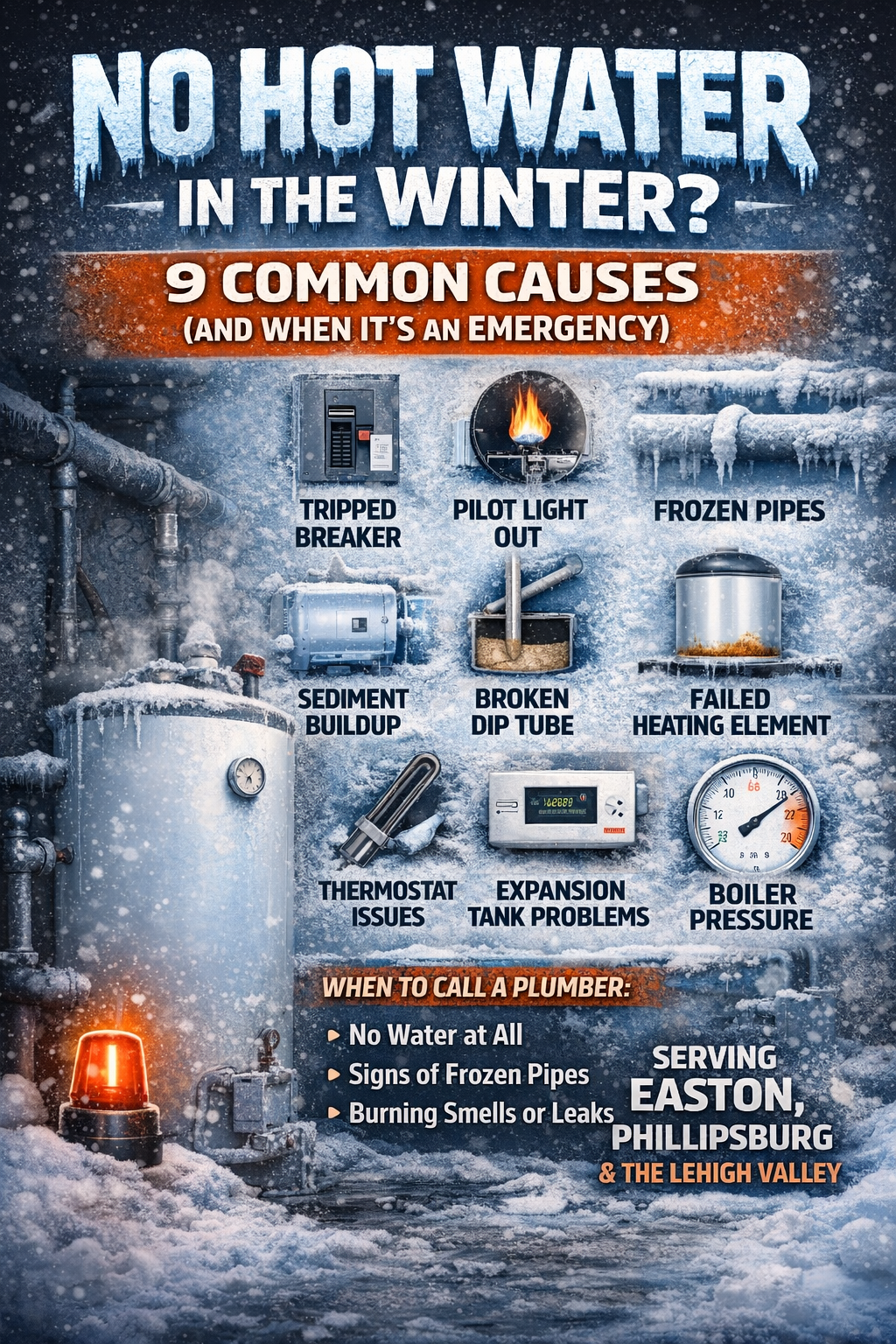
1. Tripped Breaker (Electric Water Heaters)
If you have an electric water heater, start here.
Cold weather can increase system demand, and sometimes that causes a breaker to trip.
What to check:
Go to your electrical panel
Look for a tripped breaker labeled “water heater”
Reset it once
⚠️ If it trips again, stop—this could be a heating element or electrical issue.
2. Pilot Light Went Out (Gas Water Heaters)
For gas systems, a blown-out pilot light is a common reason for no hot water.
Cold drafts or pressure changes can extinguish it.
What to do:
Check if the pilot is lit
Follow manufacturer instructions to relight it
⚠️ If it won’t stay lit, you may have a thermocouple issue—this requires service.
3. Frozen Pipes
This is a BIG one during freezing temperatures.
If your pipes freeze, water can’t reach your heater—or hot water can’t reach your fixtures.
Signs:
Little to no water flow
Frost on exposed pipes
Only cold water (or none at all)
🚨 This can turn into a burst pipe quickly.
If you suspect freezing, act fast or call a plumber.
4. Sediment Buildup in the Tank
Over time, minerals settle at the bottom of your tank.
In winter, your system works harder—and that buildup can reduce heating efficiency or block heat transfer.
Signs:
Hot water runs out quickly
Rumbling or popping noises
Inconsistent temperatures
5. Broken Dip Tube
The dip tube pushes cold water to the bottom of the tank to be heated.
If it breaks, cold water mixes at the top—so your “hot” water turns lukewarm fast.
Common symptom:
Hot water doesn’t last long at all
6. Failed Heating Element (Electric)
Electric water heaters rely on heating elements inside the tank.
If one fails:
You may get limited hot water
Or none at all
This is especially noticeable in winter when demand is higher.
7. Thermostat Issues
If your thermostat is malfunctioning, your water may not heat properly.
Sometimes it’s just set too low—but other times it’s failing completely.
8. Expansion Tank Problems
If your system has an expansion tank and it fails, it can affect pressure and performance.
This can indirectly impact your hot water supply—especially in closed plumbing systems.
9. Boiler Pressure Problems (for Boiler Systems)
If your home uses a boiler for hot water:
Low pressure = poor performance or no hot water.
Typical safe range:
Around 12–15 PSI (when cold)
If pressure drops too low, your system may shut down or stop producing hot water.
🚨 When Is It an Emergency?
Call a plumber right away if you notice:
No water at all
Signs of frozen pipes
Leaks around your water heater
Burning smells or electrical issues
Pilot light won’t stay lit
Sudden loss of hot water during extreme cold
Winter plumbing issues can escalate FAST.
🧰 Can You Fix It Yourself?
You might be able to handle:
Resetting a breaker
Relighting a pilot light
Checking thermostat settings
But most issues—especially in winter—are better handled by a professional to prevent bigger damage.
📍 Local Help When You Need It Most
If you’re in Easton, Phillipsburg, Emmaus, or anywhere in the Lehigh Valley, and your hot water suddenly stops working, don’t wait.
At Applause Plumbing and Heating, we specialize in diagnosing and fixing winter plumbing issues quickly—so your home stays safe and comfortable.
💡 Pro Tip: Prevent This Next Winter
Flush your water heater annually
Insulate exposed pipes
Schedule a system inspection before winter
Replace aging water heaters before they fail
A little maintenance now can save you from a freezing emergency later.