

Updated June 7, 2026
A sump pump is one of the most important defenses your home has against water damage. If you live in areas like Pennsylvania or New Jersey—where heavy rain, snowmelt, and high groundwater are common—a sump pump can mean the difference between a dry basement and thousands of dollars in repairs.
In this guide, we’ll break down how sump pumps work, the different types available, what maintenance they need, and the warning signs that yours may be failing.
What Is a Sump Pump and How Does It Work?
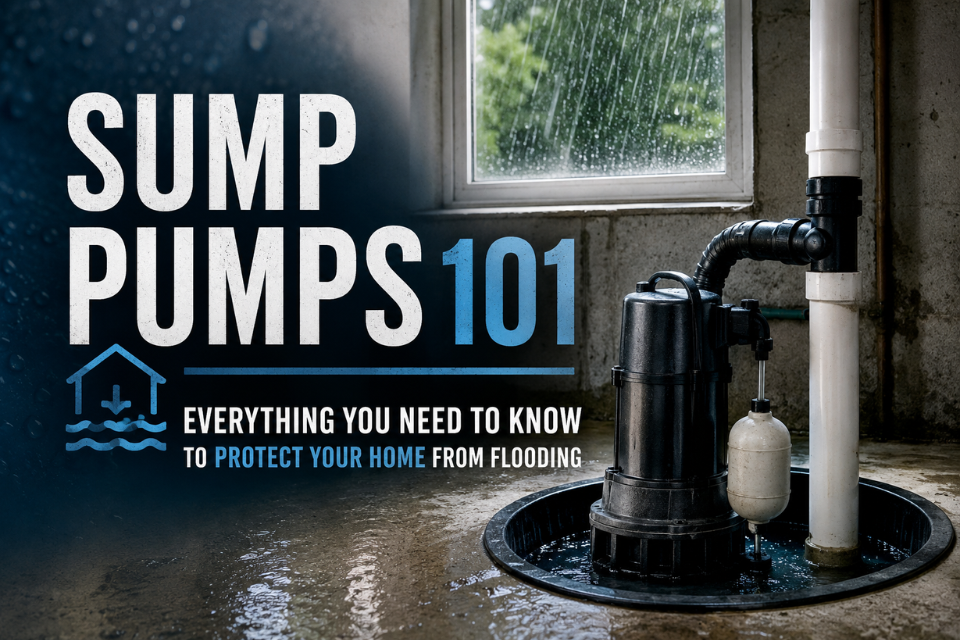
A sump pump is a device installed in the lowest part of your basement or crawl space. Its job is simple: collect water and pump it safely away from your home’s foundation.
Here’s the process:
- Water naturally flows into a sump pit (a basin in your basement floor)
- A float switch detects rising water levels
- The pump activates automatically
- Water is pushed through a discharge pipe away from your home
Without a sump pump, groundwater and heavy rainfall can build up under or around your foundation, leading to flooding, mold, and structural damage.
Why Sump Pumps Matter (Especially in PA & NJ)
Homes in our region are especially vulnerable due to seasonal weather shifts and dense soil conditions.
A sump pump helps:
- Prevent basement flooding during storms and snowmelt
- Reduce mold, mildew, and moisture damage
- Protect your foundation from long-term water exposure
- Preserve property value and structural integrity
Even a single heavy storm can overwhelm an unprotected basement.
Types of Sump Pumps
1. Submersible Sump Pumps
Installed inside the sump pit and fully submerged.
Best for: Frequent or heavy water intrusion
Pros:
- Powerful and efficient
- Quieter operation
- Longer lifespan (7–10 years)
Cons:
- Higher cost
- More involved installation
2. Pedestal Sump Pumps
Motor sits above the pit with a hose down into the water.
Best for: Light to moderate water issues
Pros:
- More affordable
- Easier to service
Cons:
- Noisier
- Shorter lifespan (5–7 years)
- Less powerful
3. Battery Backup Sump Pumps
Secondary system that runs during power outages.
Best for: Storm-prone or outage-prone areas
Pros:
- Works when power goes out
- Adds emergency protection
Cons:
- Battery requires replacement and testing
- Additional cost
4. Combination Systems
Primary pump + backup pump in one system.
Best for: Maximum protection
Pros:
- Most reliable option
- Built-in redundancy
Cons:
- Higher upfront investment
- More components to maintain
How Sump Pumps Are Installed
Professional installation ensures proper performance and drainage.
Typical process includes:
- Selecting the lowest point in the basement
- Digging and lining a sump pit
- Installing the pump system
- Connecting a discharge line (directed away from the home)
- Adding a check valve to prevent backflow
- Testing the full system with water
Proper discharge placement is critical—poor routing can cause water to cycle right back toward the foundation.
Sump Pump Maintenance Tips
A sump pump doesn’t need much maintenance, but it does need consistent checks:
- Test it monthly by pouring water into the pit
- Keep the pit free of dirt, gravel, or debris
- Make sure the float switch moves freely
- Check the discharge line for blockages (especially in winter)
- Replace backup batteries every 2–3 years
- Listen for unusual noise during operation
A quick monthly test can prevent major failures during storms.
Common Sump Pump Problems
Pump won’t turn on
- Stuck float switch
- Power issue or unplugged unit
- Faulty outlet
Pump runs constantly
- Float stuck in “on” position
- Improper pit sizing
- Faulty check valve
Weak or no discharge
- Clogged discharge line
- Pump undersized for water volume
Loud or unusual noises
- Worn motor bearings
- Debris in impeller
- Normal wear (especially older pedestal units)
When to Call a Professional
Some issues are signs your system is failing or undersized:
- Repeated cycling during storms
- Water still entering the basement
- Pump running nonstop or not shutting off
- Electrical or motor issues
- Backup system not functioning
At Applause Plumbing and Heating, we provide sump pump installation, maintenance, and repair services throughout New Jersey and Pennsylvania. Our goal is to make sure your home stays protected before the next heavy rain hits.
Final Thoughts
A sump pump is not just a basement accessory—it’s essential protection for your home. With proper installation and simple maintenance, it can prevent costly flooding and give you peace of mind during storm season.
If your system is older, struggling, or hasn’t been checked recently, now is the best time to have it inspected before problems start.
📞 Contact us today for an estimate or sump pump evaluation.