

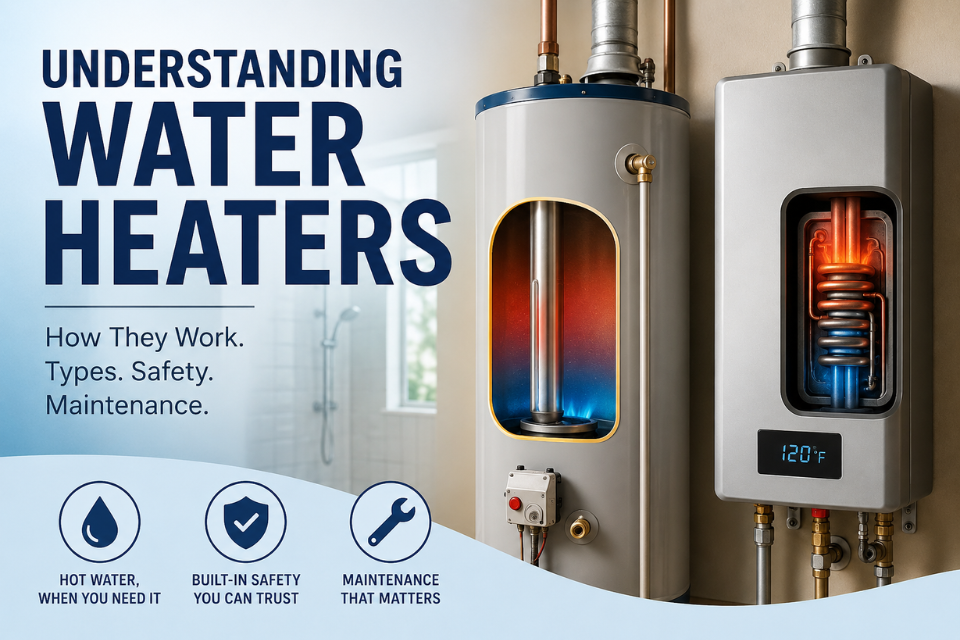
A water heater is one of the most essential appliances in any home. It takes cold water from your main supply line, raises its temperature to a set level (typically between 120°F and 140°F), and delivers it for everyday uses like showers, dishwashing, laundry, and cleaning.
While water heaters come in different styles, they all operate on two fundamental principles:
- Heat transfer — moving heat from an energy source into the water
- Temperature regulation — maintaining safe, consistent water temperatures
Understanding how these systems work can help homeowners make better decisions about maintenance, repairs, and upgrades.
1. Traditional Storage Tank Water Heaters
The traditional storage tank water heater is the most common type found in homes. It consists of an insulated metal tank that stores and continuously heats a supply of water—typically between 30 and 80 gallons.
How It Works
Cold Water Inlet & Dip Tube
Cold water enters through a pipe at the top of the tank. Inside, a long tube called the dip tube directs the incoming cold water to the bottom of the tank. This prevents it from immediately mixing with the already-heated water at the top.
Heating the Water
- Gas Water Heaters:
A burner located at the bottom ignites and heats the water. The heat rises through a central exhaust tube (called a flue), warming the surrounding water as it travels upward. - Electric Water Heaters:
Electric units use heating elements inside the tank—usually one at the bottom and one near the top. These elements heat the water in stages for efficiency and consistency.
Hot Water Delivery
Hot water naturally rises because it is less dense than cold water. When you turn on a hot tap, water is drawn from the top of the tank—where the hottest water is stored.
Key Advantage
- Reliable and simple
- Lower upfront cost
Limitation
- Can run out of hot water if demand exceeds tank capacity
2. Tankless (On-Demand) Water Heaters
Tankless water heaters take a completely different approach. Instead of storing hot water, they heat it instantly as it flows through the unit.
How It Works
Activation
When you open a hot water tap, cold water begins flowing through the unit.
Heat Exchanger
A sensor detects the flow and activates a powerful heating system:
- Gas units use a high-efficiency burner
- Electric units use strong heating coils
As the water passes through the heat exchanger, it is rapidly heated to the desired temperature.
Key Advantage
- Endless hot water supply
- Higher energy efficiency (no standby heat loss)
Limitation
- Must be properly sized for the home
- Multiple simultaneous uses (e.g., showers + laundry) may strain undersized systems
3. Essential Safety and Maintenance Components
Regardless of the type of water heater, several critical components ensure safe operation and long-term performance.
Thermostat
The thermostat monitors water temperature.
- When water cools below the set point, it signals the system to reheat
- Prevents overheating and ensures consistent output
Temperature & Pressure Relief (T&P) Valve
This is the most important safety feature in a tank system.
- Releases water if temperature or pressure becomes dangerously high
- Prevents catastrophic tank failure or explosion
Anode Rod
Inside tank-style heaters, the anode rod plays a crucial protective role.
- Made of magnesium or aluminum
- Attracts corrosive elements in the water
- Sacrifices itself to prevent the tank from rusting
Replacing the anode rod can significantly extend the life of the water heater.
Why Understanding Your Water Heater Matters
Knowing how your system works helps you:
- Spot early warning signs (rumbling, inconsistent heat, leaks)
- Perform proper maintenance (flushing sediment, checking components)
- Choose the right system for your household needs
- Avoid costly emergency failures
Final Thoughts
Whether you have a traditional tank or a modern tankless system, your water heater is working every day behind the scenes. With proper care and understanding, it can provide reliable service for many years.
If you’re unsure about your system—or if something doesn’t seem right—it’s always best to have it inspected before a small issue turns into a major repair.