

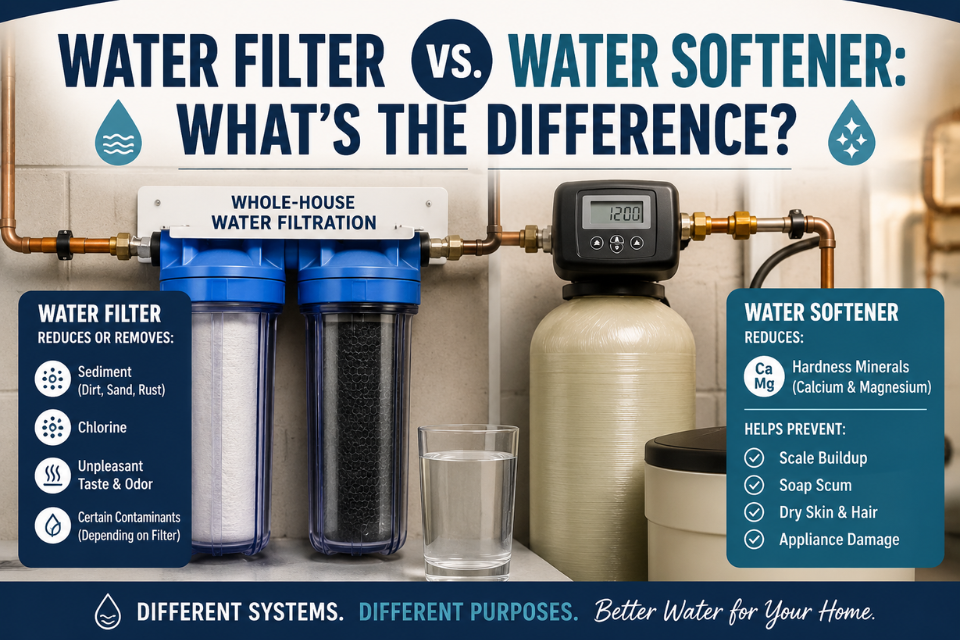
Many homeowners assume a water filter and a water softener do the same job—but they actually solve two completely different problems.
If you've ever wondered whether you need a water filter, a water softener, or both, you're not alone. Understanding the difference can help you choose the right solution for your home's water quality and avoid spending money on equipment that won't solve the problem.
In this guide, we'll explain how water filters and water softeners work, what they remove, and how to determine which system is right for your home.
Water Filter vs. Water Softener: The Quick Answer
The simplest way to think about it is this:
- A water filter is designed to reduce or remove specific particles or contaminants from your water.
- A water softener is designed to reduce water hardness by removing calcium and magnesium minerals that cause scale buildup.
In many homes, both systems can work together because they address different water quality concerns.
What Does a Water Filter Do?
A water filter improves water quality by reducing specific substances depending on the type of filtration media used.
For example, a whole-house filtration system may include:
Sediment Filters
Sediment filters help capture suspended particles such as:
- Sand
- Silt
- Dirt
- Rust particles
- Pipe scale
These filters help protect plumbing fixtures, water heaters, appliances, and other filtration equipment from excessive sediment.
Carbon Filters
Activated carbon filters are commonly used to reduce:
- Chlorine
- Unpleasant tastes
- Odors
- Certain organic compounds
Carbon filtration can improve the taste and smell of your home's water, but it is important to remember that not all carbon filters remove the same contaminants.
Different filters are designed and certified for different purposes.
What Does a Water Softener Do?
A water softener doesn't filter dirt or contaminants from your water.
Instead, it removes the minerals responsible for hard water.
These minerals include:
- Calcium
- Magnesium
Hard water isn't usually considered a health concern, but it can create numerous problems throughout your plumbing system.
Common signs of hard water include:
- White spots on dishes and glassware
- Soap that doesn't lather well
- Dry skin after showering
- Mineral buildup on faucets
- Scale inside pipes
- Reduced efficiency of water heaters
- Shorter appliance lifespan
A water softener works through a process called ion exchange, replacing calcium and magnesium ions with sodium or potassium ions.
The result is softer water that helps reduce scale buildup throughout your plumbing system.
Which Problems Does Each System Solve?
| Water Filter | Water Softener |
|---|---|
| Removes sediment (depending on filter type) | Removes calcium and magnesium hardness |
| Can reduce chlorine | Helps prevent scale buildup |
| Improves taste and odor (carbon filters) | Helps soap lather better |
| Protects plumbing from sediment | Helps protect pipes and appliances from mineral deposits |
| Improves overall water quality | Improves water performance throughout the home |
Can You Have Both?
Absolutely.
In fact, many homeowners benefit from having both a whole-house water filter and a water softener.
For example:
A sediment filter can remove sand, dirt, and rust before the water reaches your plumbing system.
A carbon filter can improve taste and reduce chlorine.
A water softener can then address hardness minerals that cause scale inside pipes and appliances.
Each system performs a different job, creating a complete water treatment solution.
Do You Need a Water Filter?
A whole-house water filter may be worth considering if you notice:
- Sediment in your water
- Rust-colored water
- Chlorine taste or odor
- Cloudy water
- Frequent clogged faucet aerators
- Well water with visible particles
- A desire to improve the taste of your home's water
Do You Need a Water Softener?
A water softener may be a better solution if you experience:
- White mineral spots on dishes
- Soap scum in showers
- Scale buildup on faucets
- Dry skin or hair after bathing
- Appliances that require frequent descaling
- Hard water stains throughout the home
How Do You Know Which One You Need?
The best place to start is by identifying the problem you're trying to solve.
If your concern is:
- Sediment
- Rust particles
- Chlorine taste
- Odor
A filtration system may be the right choice.
If your concern is:
- Hard water
- Scale buildup
- Mineral deposits
A water softener may be the better solution.
Some homes—especially those with well water—may benefit from both systems working together.
Because every home's water is different, professional water testing and an evaluation of your plumbing system can help determine the best treatment option.
The Bottom Line
Water filters and water softeners aren't competitors—they're teammates.
A water filter helps improve water quality by reducing specific particles or contaminants depending on the type of filter installed.
A water softener helps reduce hard water minerals that can damage plumbing fixtures, water heaters, and appliances over time.
Choosing the right system starts with understanding your home's water and selecting equipment designed to address your specific needs.
If you're unsure which solution is right for your home, the plumbing professionals at Applause Plumbing & Heating can help evaluate your water quality concerns and recommend a system that fits your home's plumbing and your family's needs.
Frequently Asked Questions
Is a water softener the same as a water filter?
No. A water softener removes hardness minerals like calcium and magnesium, while a water filter is designed to reduce specific particles or contaminants depending on the type of filtration media.
Can a water filter soften hard water?
No. Standard sediment and carbon filters do not remove the minerals responsible for hard water. If hard water is your concern, you'll typically need a water softener.
Can I install both a water filter and a water softener?
Yes. Many homes use both systems together because they solve different water quality problems.
Which should come first—a filter or a water softener?
In many whole-house systems, sediment filtration is installed before a water softener to help protect the softener from dirt and debris. The ideal setup depends on your home's water quality and plumbing configuration.