

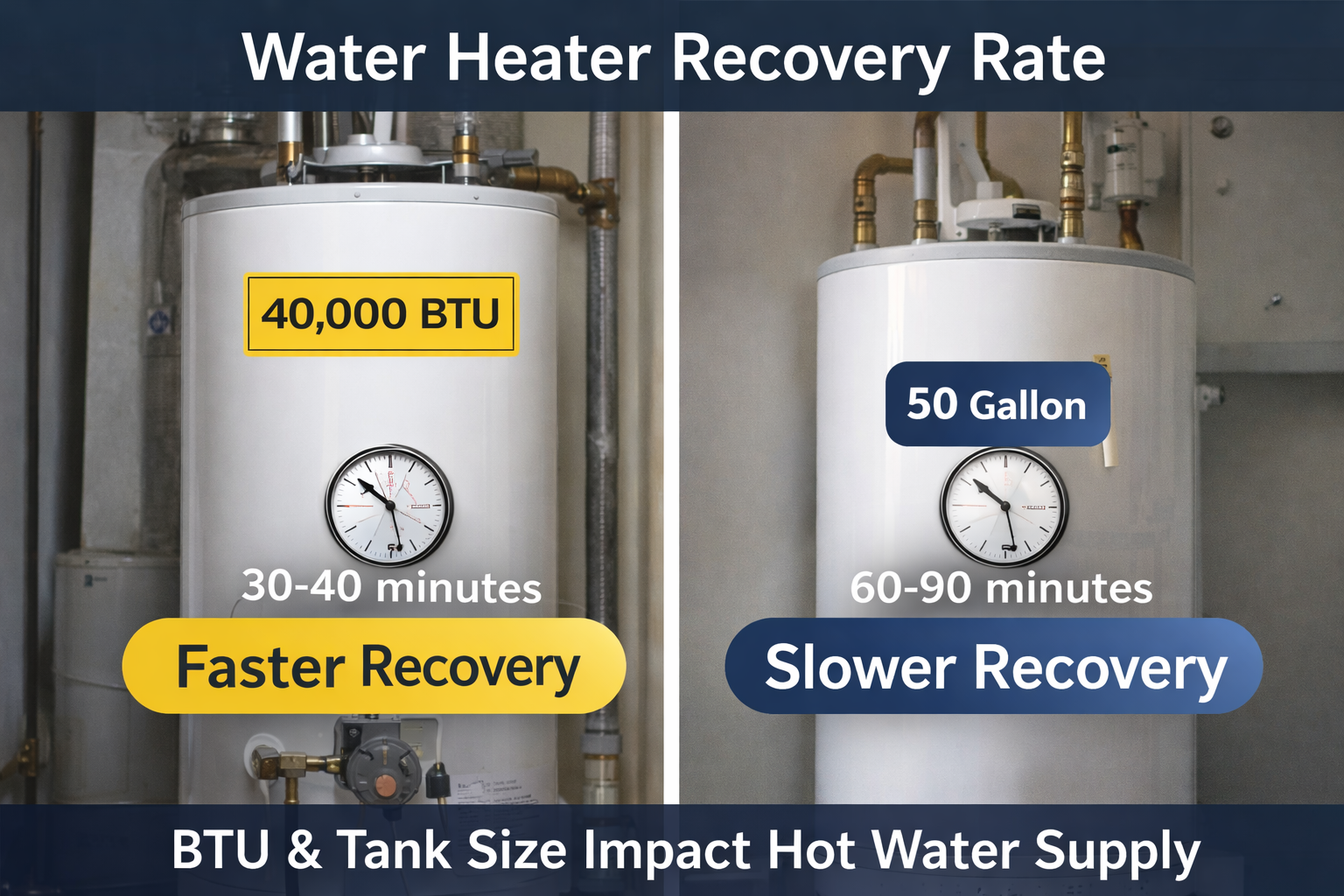
When it comes to keeping your home comfortable, few things are more frustrating than running out of hot water. Understanding your water heater’s recovery rate can make all the difference in ensuring a steady supply of hot water for showers, laundry, and daily chores.
What Is Water Heater Recovery Rate?
The recovery rate is the amount of time it takes a water heater to reheat a full tank of water after it’s been depleted. Simply put, it’s how fast your water heater can “recover” and provide hot water again.
For gas water heaters, the recovery rate is generally faster because gas heats water more quickly.
Electric water heaters typically have a slower recovery rate, as heating elements take longer to raise the water temperature.
Recovery rate is influenced primarily by two factors: BTU rating (or wattage for electric units) and tank size.
How BTU Rating Impacts Recovery Rate
BTU (British Thermal Unit) measures how much heat energy a water heater can produce per hour. The higher the BTU rating:
The faster the water can be heated.
The more efficient the water heater is at keeping up with high-demand situations.
For example, a natural gas water heater with 40,000 BTUs can heat water much faster than one with 30,000 BTUs, meaning your family can use multiple showers and appliances without running out of hot water.
📌 Learn more about BTUs and what they mean for your home’s water heater here.
Why Tank Size Matters
Even with a high BTU rating, a tank that’s too small for your household’s needs can leave you waiting for hot water.
A small tank (30–40 gallons) may be perfect for one or two people, but larger families often need 50–75 gallons or more.
When a tank runs out of hot water, the recovery rate determines how long you’ll have to wait before the next shower or laundry load.
Practical Examples
Family of 4: Using a 50-gallon gas water heater with 38,000 BTUs, the tank may run out after two showers. Thanks to its high BTU rating, it could recover in about 30–40 minutes.
Electric water heater equivalent: Same size tank, but recovery may take 1–1.5 hours. You’ll need to plan for staggered use or install a larger or more powerful unit.
Tips to Improve Hot Water Availability
Select the right tank size for your household.
Check the BTU rating or wattage to ensure fast recovery.
Consider upgrading to a tankless or hybrid water heater for instant hot water.
Regular maintenance: Flush your tank annually to remove sediment that can slow recovery.
Final Thoughts
Understanding your water heater’s recovery rate can prevent frustrating cold showers and long waits for hot water. By balancing tank size with BTU rating, you can ensure your household always has the hot water it needs—when it needs it.
For a deeper dive into how BTUs affect your water heater’s performance, check out our full guide: Understanding BTUs in Water Heaters.
Need help choosing the right water heater for your home? Our licensed plumbers at Applause Plumbing and Heating can guide you on BTU ratings, tank size, and recovery rate to make sure your hot water supply meets your family’s needs. Call 610-504-6688 to schedule a consultation today!