

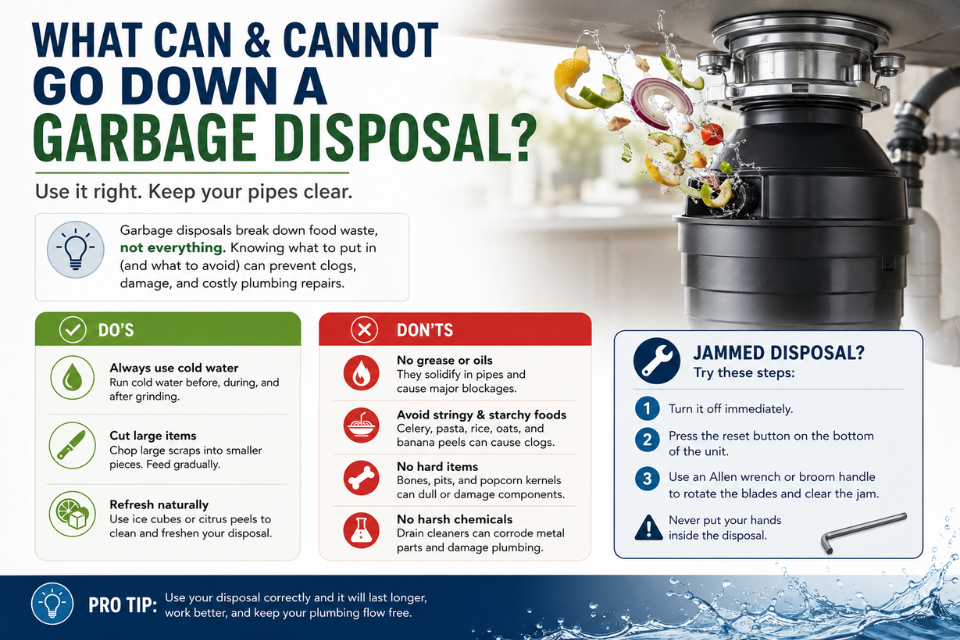
One of the most common questions homeowners ask is: “What can and cannot go down my garbage disposal?”
While garbage disposals are designed to break down food waste, they are not trash cans. Misusing them is one of the leading causes of clogged drains, damaged pipes, and costly plumbing repairs.
Understanding what’s safe—and what’s not—can save you time, money, and frustration.
How Garbage Disposals Actually Work
Garbage disposals don’t have sharp blades like many people think. Instead, they use a grinding plate (impeller) to break food into tiny particles that can safely flow through your plumbing system.
Because of this, certain foods can cause buildup, wrap around components, or expand in your pipes—leading to serious issues.
✅ The Do’s of Garbage Disposal Use
1. Always Use Cold Water
Run cold water before, during, and for about 30 seconds after grinding.
Cold water helps fats stay solid so they can be chopped and flushed away instead of sticking to your pipes.
2. Cut Large Items Into Smaller Pieces
Avoid dumping large amounts of food at once. Feed scraps gradually to prevent strain on the motor.
3. Clean and Refresh Naturally
Freshen your disposal by grinding:
- Ice cubes (to clean the grinding components)
- Citrus peels like lemon or orange (for a fresh scent)
❌ What NOT to Put Down the Disposal
1. Grease, Oils, and Fat
These may go down as liquids—but they harden inside your pipes, causing stubborn blockages over time.
2. Coffee Grounds
They don’t break down well and tend to form a thick sludge that can clog drains.
3. Eggshells
Despite popular belief, eggshell membranes can wrap around parts of the disposal and contribute to buildup.
4. Stringy Vegetables
Avoid items like:
- Celery
- Onion skins
- Corn husks
- Banana peels
These can tangle around the grinding components.
5. Starchy Foods
Foods like pasta, rice, oats, and potatoes expand with water and can form thick, glue-like clogs.
6. Hard Items
Never put these down your disposal:
- Bones
- Fruit pits
- Unpopped popcorn kernels
They can dull or damage internal components.
7. Harsh Chemical Cleaners
Products like Drano or Liquid-Plumr can corrode metal parts and damage your plumbing system.
⚠️ Troubleshooting a Jammed Disposal
If your disposal hums but doesn’t grind, it’s likely jammed or overheated.
Follow these steps:
- Turn it off immediately
Never continue running a jammed unit. - Press the reset button
Look underneath the unit for a small red or black button. - Manually rotate the blades
Use an Allen wrench (hex key) or a broom handle to free the obstruction.
⚠️ Never put your hands inside the disposal.
🛠️ Pro Tip: Prevention Is Everything
Most garbage disposal problems come down to habit. Using your disposal correctly will:
- Extend its lifespan
- Prevent costly plumbing repairs
- Keep your kitchen running smoothly
Learn More
For additional guidance and manufacturer recommendations, you can visit:
Final Thought
Your garbage disposal is a powerful kitchen tool—but only when used correctly. Treat it with care, and it will serve your home efficiently for years to come.