

A flooded basement is one of the most stressful situations a homeowner can face. Whether it’s caused by heavy rain, a sump pump failure, a burst pipe, or groundwater intrusion, the damage can escalate quickly if it’s not handled the right way. The key is to act fast—but also safely and strategically—to minimize damage and prevent long-term issues like mold growth.
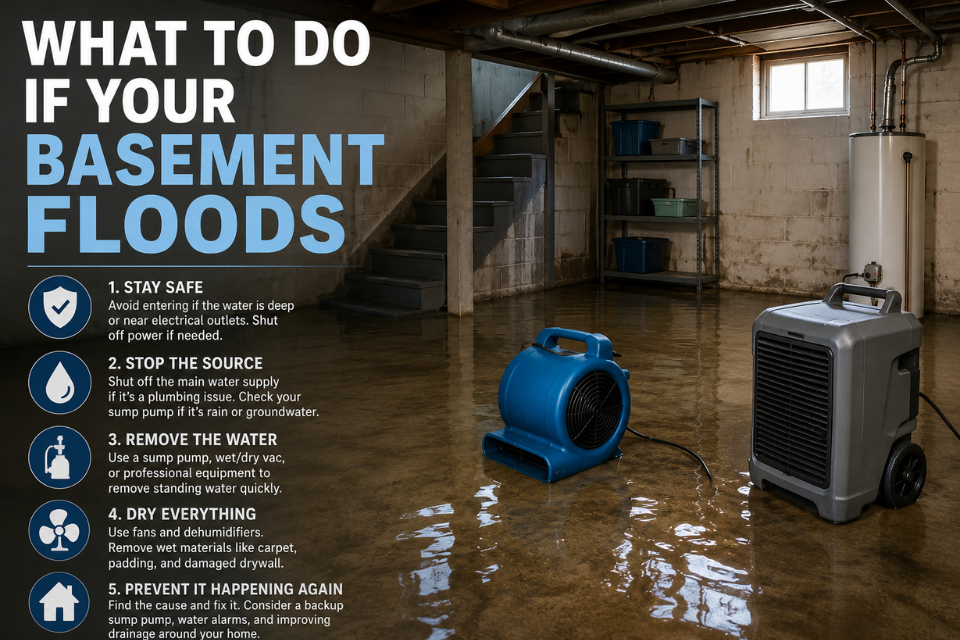
The first thing to consider is safety. If there is standing water in your basement, you should avoid going down there until you’re sure it’s safe. Water and electricity are a dangerous combination, so if the water level is high or near electrical outlets, appliances, or your panel, it’s best to shut off power to that area before entering. If you’re unsure, it’s worth calling a professional before stepping into the space.
Once it’s safe to enter, the next priority is stopping the source of the water. If the flooding is coming from a plumbing issue—like a broken pipe, failed water heater, or leaking appliance—you’ll want to shut off the main water supply to your home immediately. If the problem is related to rain or groundwater, check whether your sump pump is working. In many cases, basement flooding happens because a sump pump has failed, lost power, or can’t keep up with the volume of water.
After the source is addressed, it’s time to begin removing the water. For minor flooding, a wet/dry vacuum may be enough. For larger amounts of water, a sump pump or professional extraction equipment may be necessary. The faster you remove the water, the better chance you have of preventing serious structural damage and mold growth.
Once the standing water is gone, the focus shifts to drying everything thoroughly. This step is critical and often underestimated. Even if surfaces look dry, moisture can remain trapped in flooring, drywall, and insulation. Using fans, dehumidifiers, and opening windows (if weather permits) can help speed up the drying process. In many cases, removing wet materials like carpet, padding, or damaged drywall is necessary to prevent mold from forming.
It’s also important to evaluate what can be saved and what needs to be replaced. Porous materials like carpet, cardboard boxes, and some types of insulation often need to be discarded if they’ve been saturated. Hard surfaces can usually be cleaned and disinfected. Acting quickly—within the first 24 to 48 hours—makes a big difference in how much you can salvage.
After cleanup, take time to identify the cause of the flooding so it doesn’t happen again. Was it a sump pump failure? Poor drainage around your home? Clogged gutters? A plumbing issue? Fixing the root problem is just as important as cleaning up the damage. This might involve installing a backup sump pump, improving exterior drainage, sealing foundation cracks, or replacing aging plumbing components.
Finally, consider preventative measures for the future. A sump pump with a battery backup system can keep working even during a power outage. Installing a water alarm can alert you early before flooding becomes severe. And if your basement has flooded once, it’s worth being proactive—because it can happen again.
At Applause Plumbing and Heating, we’ve helped many homeowners in the Easton and surrounding areas deal with basement flooding—often caused by sump pump failures or aging systems. If you’re dealing with water in your basement or want to prevent it from happening again, having your system inspected can save you from a much bigger problem down the road.
A flooded basement is overwhelming, but taking the right steps quickly can protect your home, your belongings, and your peace of mind.