

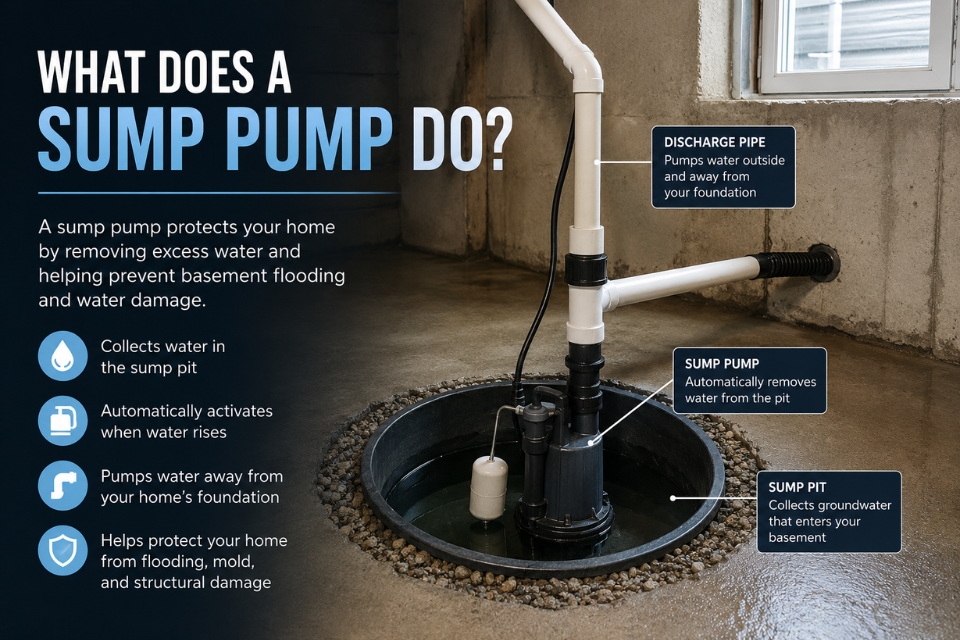
The operation of a sump pump is fairly simple, but highly effective. A float switch or pressure sensor monitors the water level inside the pit. When the water rises to a set point, the pump turns on and begins moving water through the discharge line. Once the water level drops again, the pump shuts off automatically. This cycle repeats whenever water enters the pit.
Most residential sump pumps are either submersible (installed inside the pit) or pedestal style (with the motor mounted above the pit). Submersible pumps are more common in modern homes because they are quieter, more powerful, and protected from debris. Pedestal pumps, however, are easier to service and often last longer due to reduced exposure to water.
What sump pumps actually protect against
Sump pumps are not just for catastrophic flooding events. In fact, their most important job is handling everyday groundwater movement and gradual water buildup. Without one, moisture can slowly seep into a basement and create conditions that lead to mold, mildew, foundation damage, and structural issues over time.
Some of the key problems sump pumps help prevent include:
- Basement flooding during heavy rainstorms or snowmelt
- Groundwater seepage through foundation walls and floor joints
- Mold and mildew growth caused by persistent dampness
- Damage to stored belongings, flooring, and drywall
- Structural deterioration of the foundation over time
- Increased humidity levels throughout the home
Even small amounts of recurring moisture can create long-term issues that are expensive to repair. A sump pump acts as a first line of defense, continuously managing water before it becomes a visible problem.
Where the water goes
One of the most important but often overlooked parts of a sump pump system is the discharge line. Once water is pumped out of the pit, it has to go somewhere safe. Typically, the discharge pipe runs outside the home and releases water several feet away from the foundation. In some systems, it may connect to a storm drain or dry well, depending on local code and property layout.
Proper discharge placement is critical. If water is released too close to the foundation, it can simply cycle back into the basement, forcing the pump to work repeatedly without solving the problem.
Common types of sump pump systems
While the basic function is the same, sump pump systems can vary depending on home needs and risk level:
- Primary sump pump: The main pump that handles everyday water removal
- Battery backup sump pump: A secondary system that runs during power outages
- Water-powered backup pump: Uses municipal water pressure instead of electricity
- Combination systems: Primary pump plus backup integrated into one unit
Backup systems are especially important because heavy storms often coincide with power outages—exactly when a sump pump is needed most.
Signs a sump pump may not be working properly
Like any mechanical system, sump pumps can fail or become less effective over time. Catching issues early can prevent major water damage. Common warning signs include:
- Pump running constantly or not shutting off
- Loud or unusual noises during operation
- Visible rust or corrosion on components
- Water remaining in the pit after the pump activates
- Frequent tripping of electrical breakers
- Strong odors or stagnant water in the sump pit
Regular maintenance, including testing the pump and cleaning the pit, helps ensure reliable operation when it’s needed most.
Why sump pumps matter for homeowners
A sump pump is essentially an insurance policy against water damage. While it may sit quietly for long periods without activating, its importance becomes clear during a major storm or groundwater surge. Compared to the cost of water damage restoration, mold remediation, or foundation repair, a properly functioning sump pump system is a relatively small investment that provides significant protection.
For homes in wetter climates or areas with basements below grade, sump pumps are not optional—they are essential infrastructure. They protect not only the structure itself but also the health and safety of the people living inside it.
In short, a sump pump is doing constant behind-the-scenes work to keep water where it belongs: outside the home.