

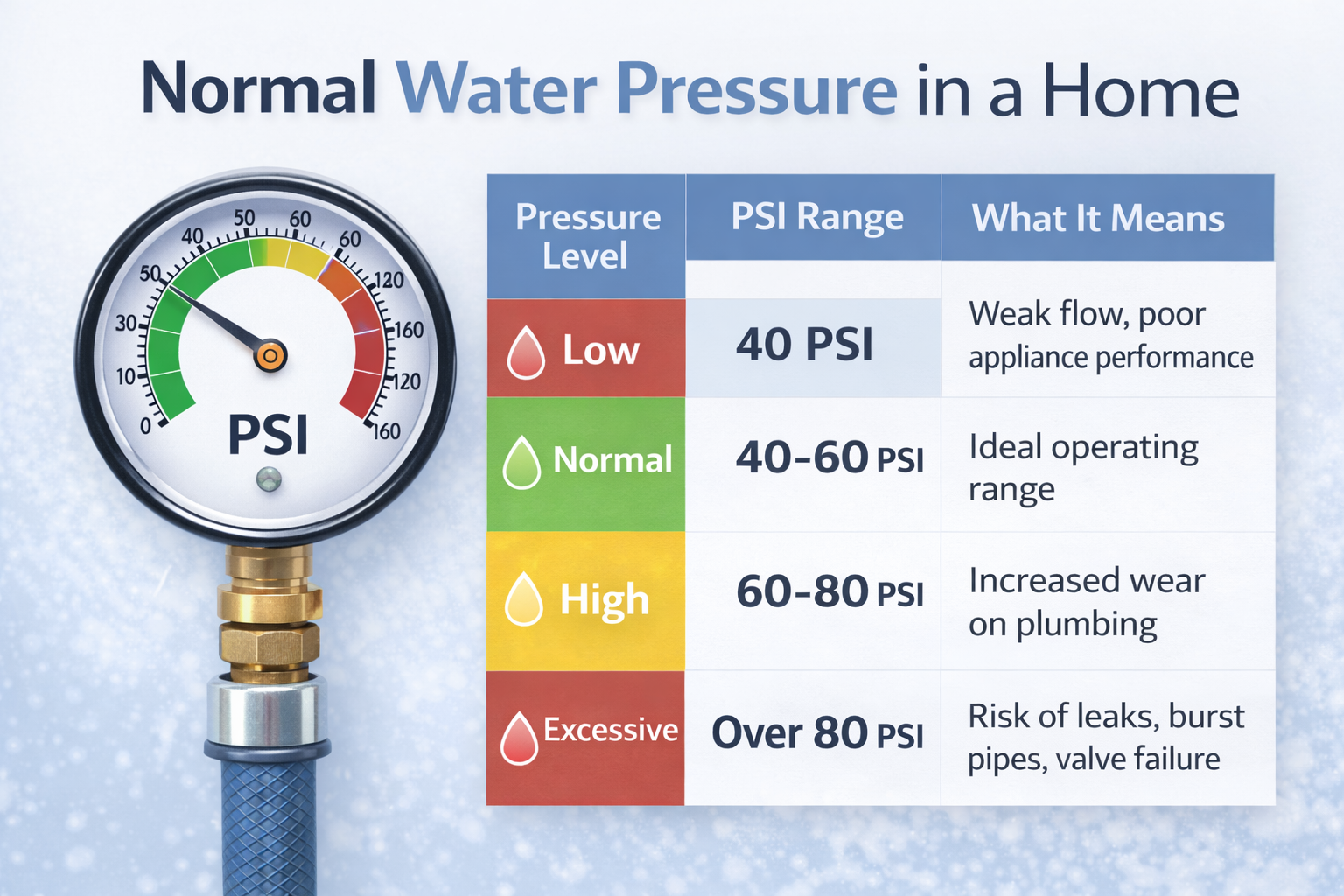
Many homeowners don’t realize their plumbing system operates within a very specific pressure range — until something goes wrong. Too much pressure can damage pipes and appliances, while too little pressure affects daily use. Knowing your home’s water pressure — measured in PSI — can help prevent leaks, failures, and costly repairs.
This guide breaks down exact pressure numbers, how to test them, and what they mean for your plumbing system.
What Does PSI Mean in Plumbing?
PSI stands for pounds per square inch, which measures the force of water flowing through your pipes. Residential plumbing systems are designed to work within a specific PSI range to balance performance and safety.
Normal Residential Water Pressure (PSI Chart)
| Pressure Level | PSI Range | What It Means |
|---|---|---|
| Low | Below 40 PSI | Weak flow, poor appliance performance |
| Normal | 40–60 PSI | Ideal operating range |
| High | 60–80 PSI | Increased wear on plumbing |
| Excessive | Over 80 PSI | Risk of leaks, burst pipes, valve failure |
Most plumbing codes recommend 60 PSI or lower inside the home.
What Happens If Water Pressure Is Too High?
High pressure often goes unnoticed — but it quietly damages plumbing over time. Common issues include:
Premature water heater failure
Leaking supply lines
Running toilets
Dripping faucets
Failed washing machine hoses
Burst pipe fittings
Water heaters, for example, are typically rated for a maximum of 80 PSI. Consistently higher pressure can shorten their lifespan significantly.
What Causes High Water Pressure?
Several factors can increase pressure beyond safe limits:
Municipal supply pressure exceeding residential limits
Absence of a pressure-reducing valve (PRV)
A failing or misadjusted PRV
Thermal expansion from water heaters
Recent changes to municipal infrastructure
High pressure is especially common in older homes that were never upgraded with modern regulating devices.
How to Test Your Home’s Water Pressure
DIY Pressure Test
You can test water pressure using a hose-thread pressure gauge, available at hardware stores.
Steps:
Turn off all water inside the home
Attach the gauge to an outdoor spigot or laundry sink
Turn the water on fully
Read the PSI level
Readings above 75–80 PSI indicate a potential issue.
Why Pressure Changes Throughout the Day
Pressure often fluctuates based on:
Time of day
Neighborhood water demand
Municipal pumping cycles
Consistently high readings — not temporary spikes — are the real concern.
Pressure-Reducing Valves (PRVs): What They Do
A PRV regulates incoming water pressure to protect your plumbing system. Properly adjusted PRVs usually maintain pressure between 45–60 PSI.
Signs a PRV may be failing:
Sudden pressure changes
Pressure climbing above 80 PSI
Banging pipes or running fixtures
PRVs typically last 10–15 years depending on water quality.
Why Older Homes Are More Vulnerable
Older plumbing systems often contain:
Galvanized steel piping
Aging shut-off valves
Older water heaters without expansion tanks
These systems are far less tolerant of high pressure and more likely to fail suddenly.
When to Call a Plumber
Call a licensed plumber if:
Pressure exceeds 80 PSI
Pressure changes without warning
Fixtures fail repeatedly
You experience unexplained leaks
Professional testing ensures pressure is properly regulated and plumbing components are protected.
Protecting Your Plumbing Long-Term
Monitoring water pressure is one of the simplest ways to prevent expensive plumbing damage. Knowing the numbers — not just the symptoms — helps homeowners make informed decisions before emergencies happen.