

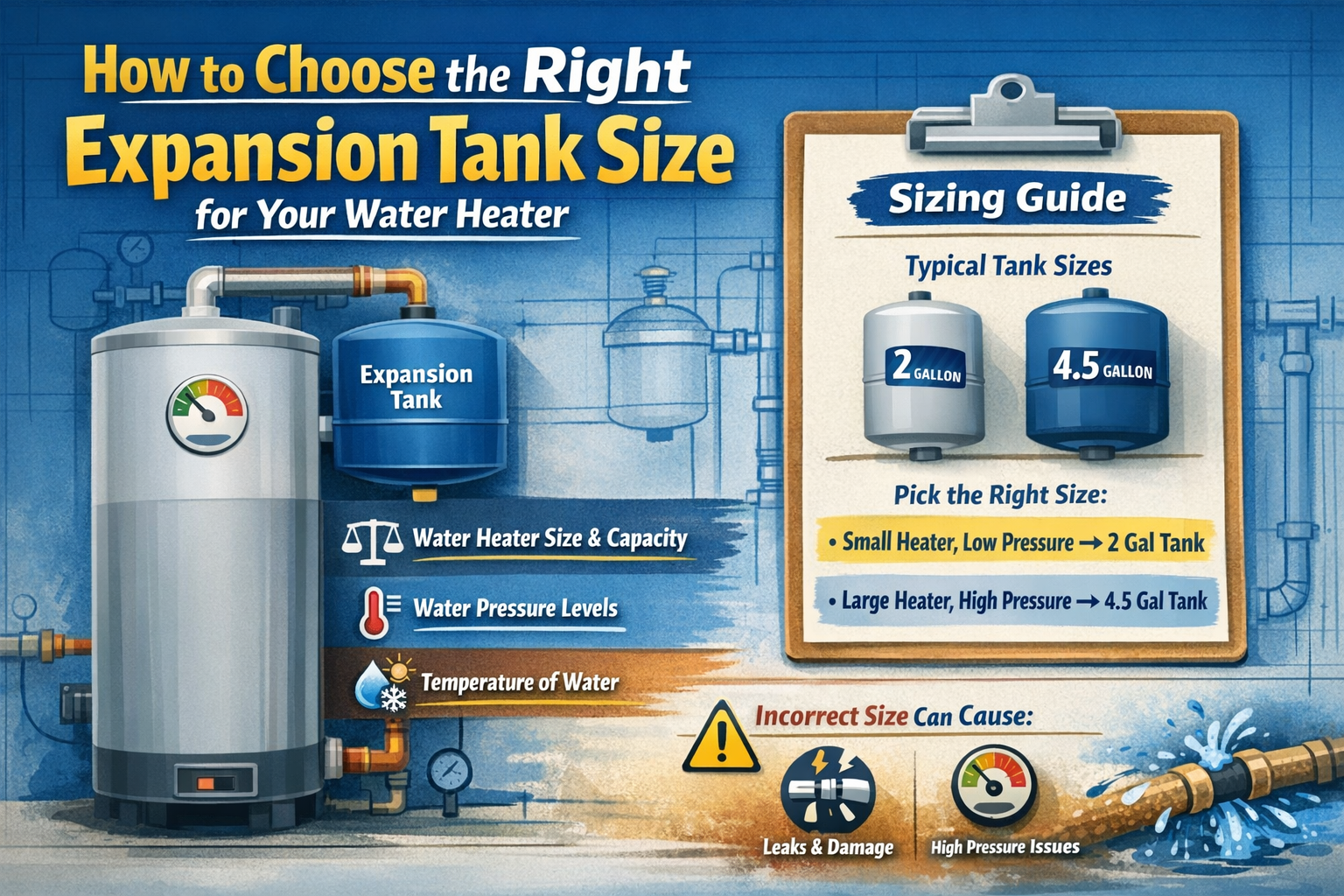
Not all expansion tanks are the same size—and choosing the wrong one can lead to pressure problems, leaks, or even damage to your water heater.
If you’ve been told you need an expansion tank (or you’re replacing one), this guide will help you understand exactly how sizing works—and how to get it right.
What Does an Expansion Tank Do?
An expansion tank is designed to absorb excess pressure created when water heats up.
When water is heated, it expands. In a closed plumbing system (which most modern homes have), that extra volume has nowhere to go.
That’s where the expansion tank comes in—it gives that expanding water a safe place to go, preventing:
Pressure spikes
Leaks in pipes and fixtures
Damage to your water heater
Premature wear on valves and seals
Why Expansion Tank Size Matters
This is where many homeowners (and even some installers) get it wrong.
If your expansion tank is:
Too small → It fills up too quickly and can’t absorb enough pressure
Too large → Usually not harmful, but unnecessary and more expensive
A properly sized tank ensures:
✔ Stable water pressure
✔ Longer lifespan for your plumbing system
✔ Better protection for your water heater
What Determines the Right Expansion Tank Size?
1. Water Heater Tank Size
The bigger your water heater, the more water expands when heated.
Typical sizes:
40-gallon tank → smaller expansion tank
50-gallon tank → medium expansion tank
75–80 gallon tank → larger expansion tank
2. Incoming Water Pressure
Your home’s static water pressure plays a major role.
Higher pressure = more expansion force
Lower pressure = less stress on the system
Most homes should be around 50–70 PSI.
If your pressure is already high, you may need a larger expansion tank.
3. Temperature Increase
The hotter your water heater is set, the more the water expands.
For example:
120°F → standard expansion
140°F → significantly more expansion
Higher temperatures = more volume change = larger tank needed
4. System Type (Closed vs Open)
If your home has:
A pressure reducing valve (PRV)
A check valve or backflow preventer
👉 You have a closed system and need an expansion tank.
General Expansion Tank Sizing Guide
Here’s a simplified reference homeowners can understand:
| Water Heater Size | Typical Expansion Tank Size |
|---|---|
| 30–40 gallons | 2-gallon tank |
| 40–50 gallons | 2–4 gallon tank |
| 50–75 gallons | 4–5 gallon tank |
| 75+ gallons | 5+ gallon tank |
⚠️ Important: This is a general guideline. Exact sizing depends on pressure and temperature.
What Happens If Your Expansion Tank Is the Wrong Size?
Too Small
Water pressure spikes
Relief valve may start dripping
Shortened water heater lifespan
Increased risk of leaks
Too Large
Usually safe
Just costs more and takes up extra space
👉 When in doubt, slightly larger is better than too small.
Do You Also Need to Match the Air Pressure?
Yes—and this is often overlooked.
Your expansion tank has an internal air bladder that must be pre-charged to match your home’s water pressure.
Example:
Home pressure = 60 PSI
Expansion tank should be set to 60 PSI
If this isn’t set correctly:
The tank won’t work properly
You may still get pressure issues
Signs Your Expansion Tank Is Undersized or Failing
Watch for these warning signs:
Fluctuating water pressure
Relief valve dripping
Banging or knocking pipes
Expansion tank feels completely full of water
Leaks near your water heater
Professional Sizing vs Guessing
While charts help, proper sizing often requires:
Measuring your home’s actual water pressure
Checking for a closed system
Matching the tank to your heater + pressure conditions
At Applause Plumbing and Heating, we size expansion tanks correctly the first time—so you don’t deal with hidden pressure problems later.
How This Connects to BTUs and Recovery Rate
Expansion tank sizing is closely related to how your system performs overall.
👉 Learn more about how heating power affects your system in our guide:
Understanding BTUs in Water Heaters: Why Fuel Type and Energy Output Matter
Need Help Choosing the Right Expansion Tank?
If you're installing a new water heater or dealing with pressure issues, we can help you choose and install the correct expansion tank for your home.
📍 Serving Easton, Phillipsburg, and the Lehigh Valley
📞 Call 610-504-6688