

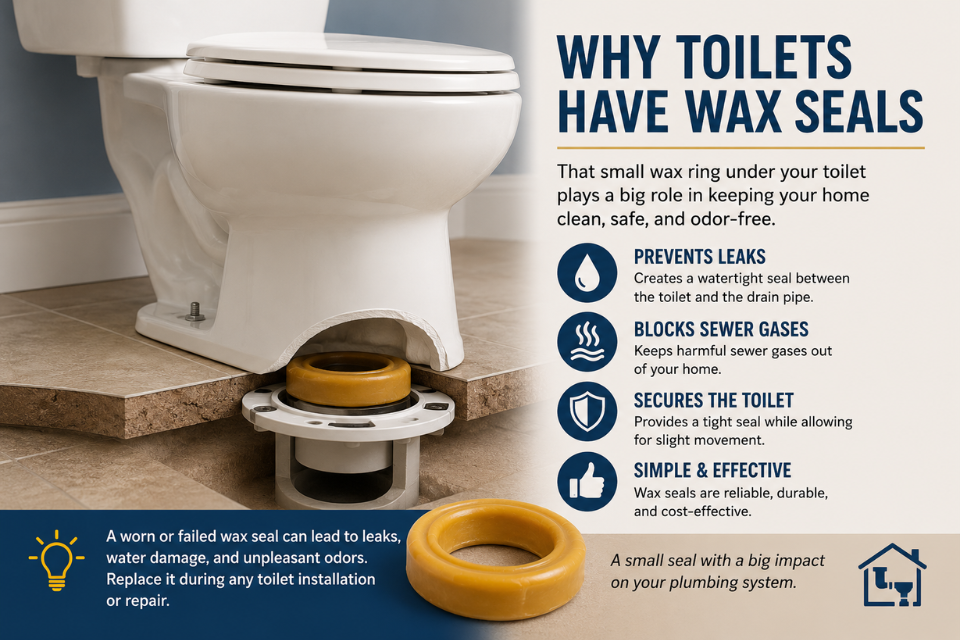
If you’ve ever replaced or repaired a toilet, you’ve probably heard about the “wax ring” that sits underneath it. It’s a small, simple component—but it plays a critical role in keeping your bathroom clean, odor-free, and functioning properly.
A toilet isn’t just bolted to the floor—it’s sealed to the drain system below it. That seal is what prevents water and sewer gases from escaping where the toilet meets the floor. This is where the wax seal comes in.
A wax seal (or wax ring) sits between the base of the toilet and the flange in the floor. When the toilet is installed, the weight of the toilet compresses the wax, creating a tight, waterproof and airtight seal. This ensures that everything flushed down the toilet goes directly into the drain system—without leaks or odors.
What Does a Wax Seal Actually Do?
The wax seal may be out of sight, but it serves several very important functions:
- Prevents leaks at the base of the toilet
- Blocks sewer gases from entering your home
- Creates a tight seal between the toilet and drain pipe
- Accommodates slight movement or imperfections in the floor
Unlike rubber or plastic seals, wax is flexible and molds perfectly to the surfaces it connects. This makes it extremely effective at sealing uneven areas.
Why Use Wax Instead of Something Else?
Wax has been used in toilet installations for decades because it’s reliable, affordable, and simple. When compressed, it fills in tiny gaps and irregularities that other materials might miss.
Some of the advantages of wax seals include:
- They don’t dry out or crack easily over time
- They maintain a tight seal without needing adjustments
- They are resistant to water and bacteria
- They are cost-effective and widely available
While there are newer rubber and foam alternatives on the market, wax seals are still the most commonly used option because of their proven performance.
Common Problems with Wax Seals
Even though wax seals are durable, they’re not meant to last forever—especially if the toilet shifts or was installed improperly. Over time, issues can develop that lead to leaks or odors.
Some common signs of a failing wax seal include:
- Water pooling around the base of the toilet
- A persistent sewer smell in the bathroom
- A toilet that feels loose or rocks slightly
- Stains or soft spots in the flooring near the toilet
Once a wax seal is compromised, it cannot be repaired—it must be replaced.
Why This Matters for Homeowners
A failing wax seal might seem like a minor issue, but it can quickly turn into a bigger problem. Leaks at the base of a toilet can damage flooring, subflooring, and even the structure beneath your bathroom if left unaddressed.
Because the seal is hidden, many homeowners don’t notice the problem until there’s already damage. That’s why it’s important to pay attention to early warning signs and address them quickly.
At Applause Plumbing & Heating, we help homeowners throughout Easton, Phillipsburg, and the Lehigh Valley diagnose and repair toilet leaks the right way. Whether it’s replacing a wax seal, resetting a toilet, or addressing underlying issues, taking care of the problem early can save you from costly repairs later on.