

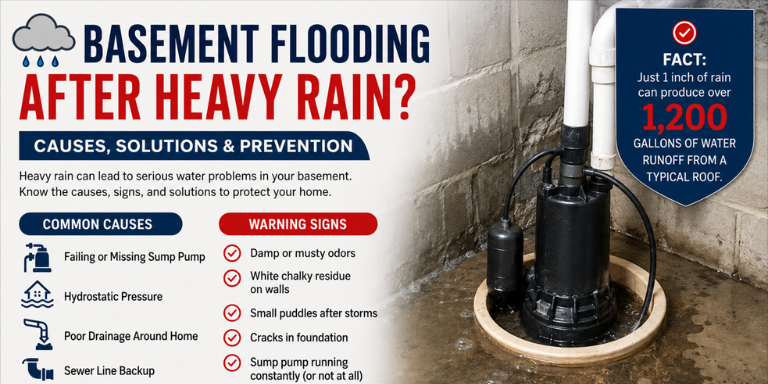
Woke up to water in your basement after last night’s rain? You’re not alone. Across Easton, PA, Phillipsburg, NJ, and the Lehigh Valley, heavy rainfall is one of the most common causes of basement flooding—especially in older homes.
The good news? Most basement flooding issues can be prevented or fixed once you understand what’s causing them.
🚨 Why Basements Flood After Heavy Rain
When the ground becomes saturated during a storm, water has nowhere to go. It builds up around your foundation and begins to push its way inside.
Here are the most common causes:
1. Failing or Missing Sump Pump
A sump pump is your home’s first line of defense against flooding.
- If it fails, water has nowhere to go
- If you don’t have one, your basement is vulnerable
- Many homes in Easton and surrounding areas either lack a sump pump or have outdated systems
👉 Fact: The American Society of Home Inspectors reports that over 60% of U.S. homes experience below-ground moisture issues.
2. Hydrostatic Pressure
This is one of the biggest (and most misunderstood) causes.
When soil becomes saturated, water pressure builds against your foundation and forces water through:
- Cracks in walls or floors
- Basement seams
- Porous concrete
👉 Important Fact: Just 1 inch of rain can produce over 1,200 gallons of water runoff from a typical roof.
3. Poor Drainage Around Your Home
If water isn’t directed away from your house, it will settle around your foundation.
Common issues:
- Clogged or short downspouts
- Improper grading (ground sloping toward your house)
- Blocked exterior drains
4. Sewer Line Backup
Heavy rain can overwhelm municipal sewer systems.
This can cause:
- Water backing up through basement drains
- Contaminated water entering your home
👉 This is one of the most serious situations and requires immediate attention.
⚠️ Warning Signs Before Your Basement Floods
Catching the problem early can save thousands in damage.
Look for:
- Damp or musty odors
- White chalky residue on walls (efflorescence)
- Small puddles after storms
- Hairline cracks in foundation
- Sump pump running constantly (or not at all)
🛠️ What to Do If Your Basement Is Flooding
If you notice water during or after a storm:
- Avoid standing water near electrical outlets
- Stop the source if possible
- Call a professional plumber immediately
👉 The longer water sits, the higher the risk of:
- Mold growth (can begin in 24–48 hours)
- Structural damage
- Ruined flooring and belongings
🔧 How to Prevent Basement Flooding (Long-Term Solutions)
✔️ Install or Replace a Sump Pump
A properly installed sump pump system can remove thousands of gallons of water during a storm.
✔️ Add a Battery Backup System
Power outages often happen during storms—right when you need your sump pump most.
✔️ Improve Exterior Drainage
- Extend downspouts at least 6–10 feet away from your home
- Ensure proper grading away from your foundation
✔️ Install a Check Valve
Prevents sewage from backing up into your home during heavy rain.
📍 Why Basement Flooding Is Common in Easton & Lehigh Valley Homes
Homes in Easton, PA, Phillipsburg, NJ, and surrounding areas are especially vulnerable due to:
- Older foundations
- High water tables
- Seasonal heavy rains
- Clay-rich soil that holds water
👉 These conditions make sump pump systems and proper drainage essential—not optional.
💧 Protect Your Home Before the Next Storm
If your basement has flooded once, it will likely happen again—unless the root cause is fixed.
At Applause Plumbing and Heating, we help homeowners across Easton, PA, Phillipsburg, NJ, and the Lehigh Valley:
- Install reliable sump pump systems
- Replace failing pumps
- Diagnose drainage issues
- Protect homes from future flooding
📞 Need Help Fast?
Don’t wait until the next storm causes more damage.
Contact Applause Plumbing and Heating today to schedule an inspection or sump pump installation and keep your basement dry year-round.