

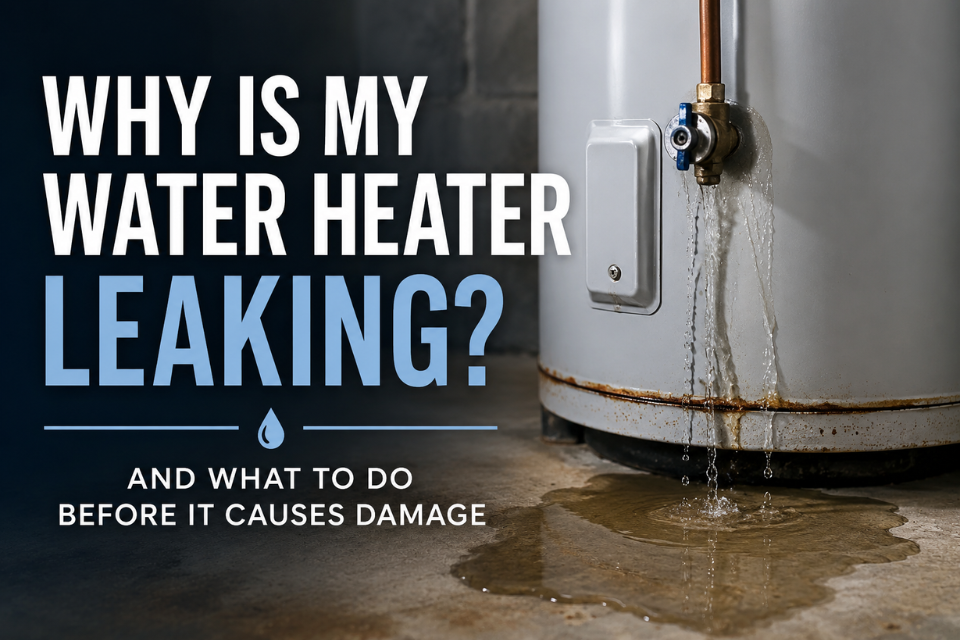
A leaking water heater is one of those problems that can go from “minor drip” to “basement flood” faster than most homeowners expect. Sometimes the leak is a simple fix. Other times, it’s a warning sign that the tank is nearing the end of its life.
Here’s how to figure out what’s going on—and what to do next.
First: Is It Actually the Water Heater?
Before assuming the tank is leaking, check for:
- Condensation on a cold tank (common in humid basements)
- Leaks from nearby plumbing lines dripping onto the heater
- A leaking pressure relief valve discharge pipe
- Water running down from fittings above the unit
If you see water pooling at the base of the tank, that’s when it becomes more serious.
Common Reasons a Water Heater Leaks
1. Loose or Failing Plumbing Connections
Over time, the hot and cold water connections at the top can loosen or corrode.
Signs:
- Dripping from top pipes or fittings
- Moisture tracking down the side of the tank
Good news: Often repairable without replacing the unit.
2. Temperature & Pressure Relief Valve (T&P Valve)
This safety valve releases water if pressure or temperature gets too high.
Why it leaks:
- Excess system pressure
- Overheating
- A faulty valve
Signs:
- Water coming from a small pipe near the top/side of tank
- Intermittent discharge
3. Corroded Tank (Most Serious)
Inside every water heater tank is a metal lining. Once corrosion breaks through, the tank cannot be repaired.
Signs:
- Water pooling at the base of the tank
- Rust-colored water
- Age of 8–12+ years (sometimes less depending on water quality)
What it means:
If the tank itself is leaking, replacement is usually the only solution.
4. Sediment Buildup Causing Stress Cracks
Hard water minerals settle at the bottom of the tank over time. This causes overheating and stress on the metal.
Signs:
- Rumbling or popping noises
- Reduced hot water supply
- Leak developing near bottom seams
5. Drain Valve Failure
The drain valve at the bottom of the tank can loosen or crack.
Signs:
- Dripping directly from the bottom spigot area
- Leak slows or stops when valve is tightened (if not damaged)
What You Should Do Immediately
If you notice active leaking:
- Turn off power or gas
- Electric: shut off breaker
- Gas: turn thermostat to “pilot” or off
- Shut off the cold water supply
- Usually a valve above the tank
- Contain the water
- Towels, bucket, sump pump if needed
- Check severity
- Slow drip vs steady stream matters
If water is actively pooling or increasing, treat it as urgent.
Repair vs Replace: How to Decide
Likely repairable if:
- Leak is from fittings, valve, or pipe connections
- Unit is under 6–8 years old
- Tank itself is dry (no seepage from metal body)
Likely replacement needed if:
- Water is coming from the bottom of the tank
- Rust is visible on tank seams
- Unit is 10+ years old
- Previous repairs are stacking up
A good rule of thumb:
If the tank is leaking, it’s done.
How Long Should a Water Heater Last?
- Standard tank water heaters: 8–12 years average
- Well-maintained systems: sometimes 12–15 years
- Hard water areas (common in parts of PA/NJ): often shorter lifespan
How to Prevent Future Leaks
- Flush sediment once per year
- Inspect T&P valve periodically
- Install a water softener if hardness is high
- Have an expansion tank checked if pressure issues exist
- Schedule routine plumbing inspections
Small maintenance steps can add years of life.
When to Call a Plumber
Call a professional if:
- You cannot clearly identify the leak source
- Water is coming from the bottom of the tank
- The leak continues after shutting off supply
- You notice rust, banging noises, or inconsistent heating
In many cases, a plumber can confirm within minutes whether repair or replacement makes sense.
Final Thoughts
A leaking water heater is one of those issues where timing matters. A small fitting leak might be simple. A tank leak usually means replacement is unavoidable—and waiting too long can lead to significant water damage.
If you’re in the Easton or Lehigh Valley area and unsure what you’re dealing with, getting it checked early can often save both the unit and the floor beneath it.