

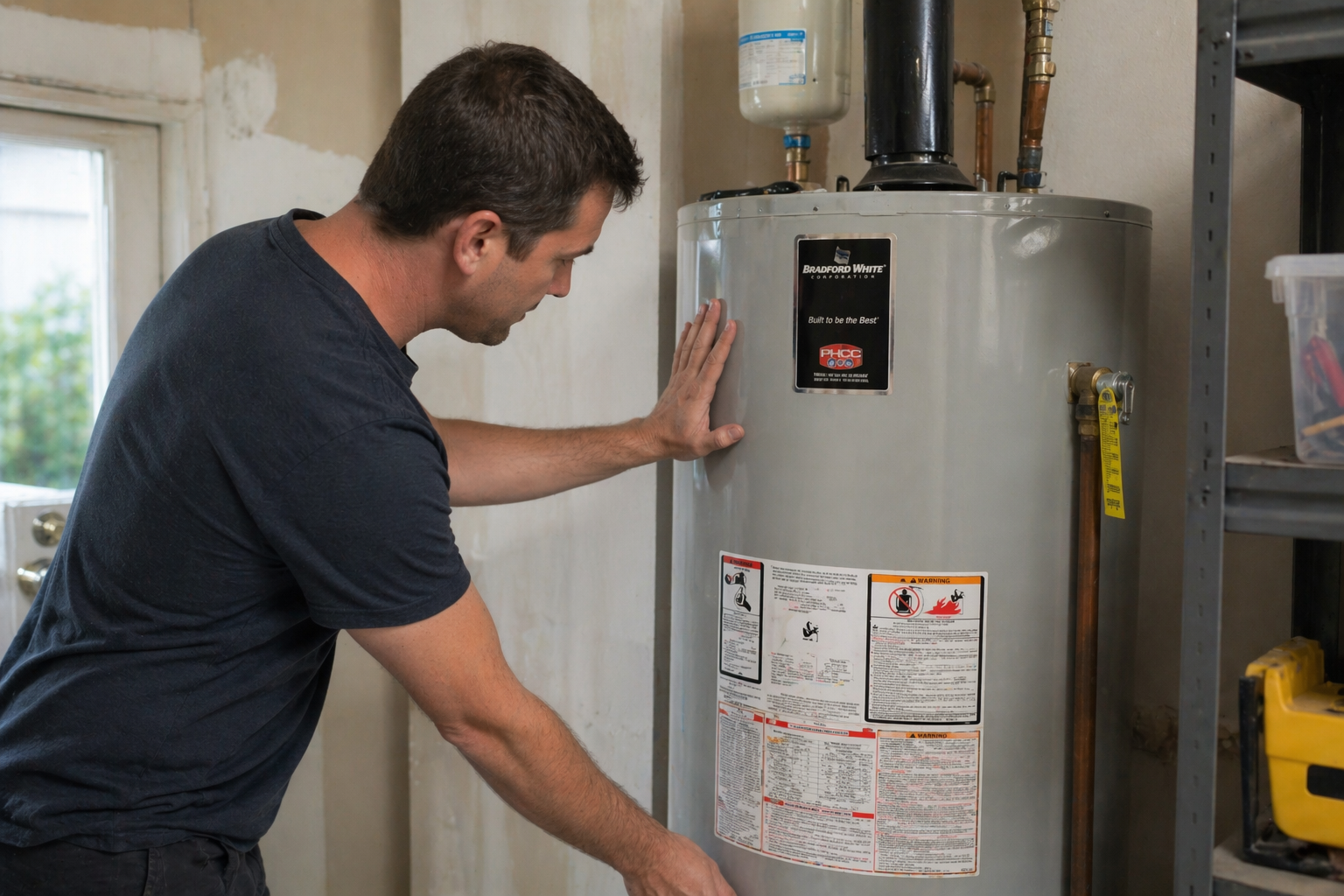
When your water heater isn’t producing enough hot water—or the water runs lukewarm and quickly turns cold—it can disrupt your entire routine. Showers, laundry, and dishwashing all become frustrating. The good news is that most causes are common, and many are fixable without replacing the entire system.
Below are 7 of the most frequent reasons your water heater may not be getting hot enough, along with practical fixes.
1. Thermostat Is Set Too Low
One of the simplest (and most overlooked) issues is the thermostat setting. Many water heaters are factory-set around 120°F, but sometimes they get bumped down or adjusted accidentally.
Fix:
- Check the thermostat on your unit (gas or electric)
- Set it to 120°F–130°F for a balance of comfort and safety
- Wait a few hours to see if performance improves
If you have young children or are concerned about scalding, stay closer to 120°F.
2. Sediment Buildup in the Tank
Over time, minerals from hard water (like calcium and magnesium) settle at the bottom of the tank. This sediment acts like insulation between the burner/element and the water, making it harder to heat efficiently.
Signs:
- Rumbling or popping noises
- Reduced hot water supply
- Water takes longer to heat
Fix:
- Flush the tank once or twice per year
- Turn off power/gas and water supply first
- Drain several gallons or do a full flush if needed
If sediment buildup is severe and long-term, professional flushing may be required.
3. Faulty Heating Element (Electric Water Heaters)
Electric water heaters typically use two heating elements. If one fails, you may still get warm water—but not enough for full household demand.
Signs:
- Hot water runs out quickly
- Water is warm but never fully hot
- Recovery time between uses is slow
Fix:
- Test the upper and lower heating elements
- Replace any faulty elements (a relatively inexpensive repair)
- If unsure, a technician can diagnose it quickly with a multimeter
4. Broken or Malfunctioning Thermostat
Your water heater has one or two thermostats that regulate temperature. If one fails, it can cause inconsistent or insufficient heating.
Signs:
- Water temperature fluctuates
- Water never reaches desired temperature
- Heating elements don’t activate properly
Fix:
- Test thermostats with a multimeter
- Replace faulty thermostat(s)
- In many cases, replacing both upper and lower thermostats is recommended for balance
5. Undersized Water Heater
Sometimes the problem isn’t a malfunction—it’s capacity. If your household demand has increased (more people, more showers, appliances running at once), your tank may simply be too small.
Signs:
- Hot water runs out quickly during peak use
- Long recovery times
- No mechanical issues found during inspection
Fix:
- Reduce simultaneous hot water usage
- Install low-flow fixtures
- Upgrade to a larger tank or consider a tankless system for higher demand
6. Dip Tube Failure
The dip tube sends cold water to the bottom of the tank so it can be heated properly. If it breaks or deteriorates, cold water can mix at the top, making your hot water feel lukewarm.
Signs:
- Hot water starts strong but turns lukewarm quickly
- No obvious heating element or burner issues
- White plastic pieces may be found in faucets or aerators (in older units)
Fix:
- Replace the dip tube (usually inexpensive but requires disassembly)
- This is typically a plumber-level repair
7. Gas Burner or Pilot Light Issues (Gas Water Heaters)
If you have a gas water heater, problems with the burner assembly or pilot light can reduce heating efficiency or prevent proper heating altogether.
Signs:
- Pilot light keeps going out
- Weak or inconsistent flame
- Water never reaches full temperature
Fix:
- Relight the pilot (if applicable)
- Clean burner ports if clogged
- Replace thermocouple or gas control valve if defective
Gas-related repairs should be handled carefully—when in doubt, call a professional.
When to Call a Professional
While some issues are simple DIY fixes, others require tools, testing, or gas/electrical knowledge. It’s time to call a plumber if:
- You’ve already adjusted the thermostat and still have issues
- Heating elements or gas components may be failing
- The unit is over 10–12 years old and underperforming
- You notice leaks, corrosion, or rust around the tank
- Hot water problems persist after flushing