

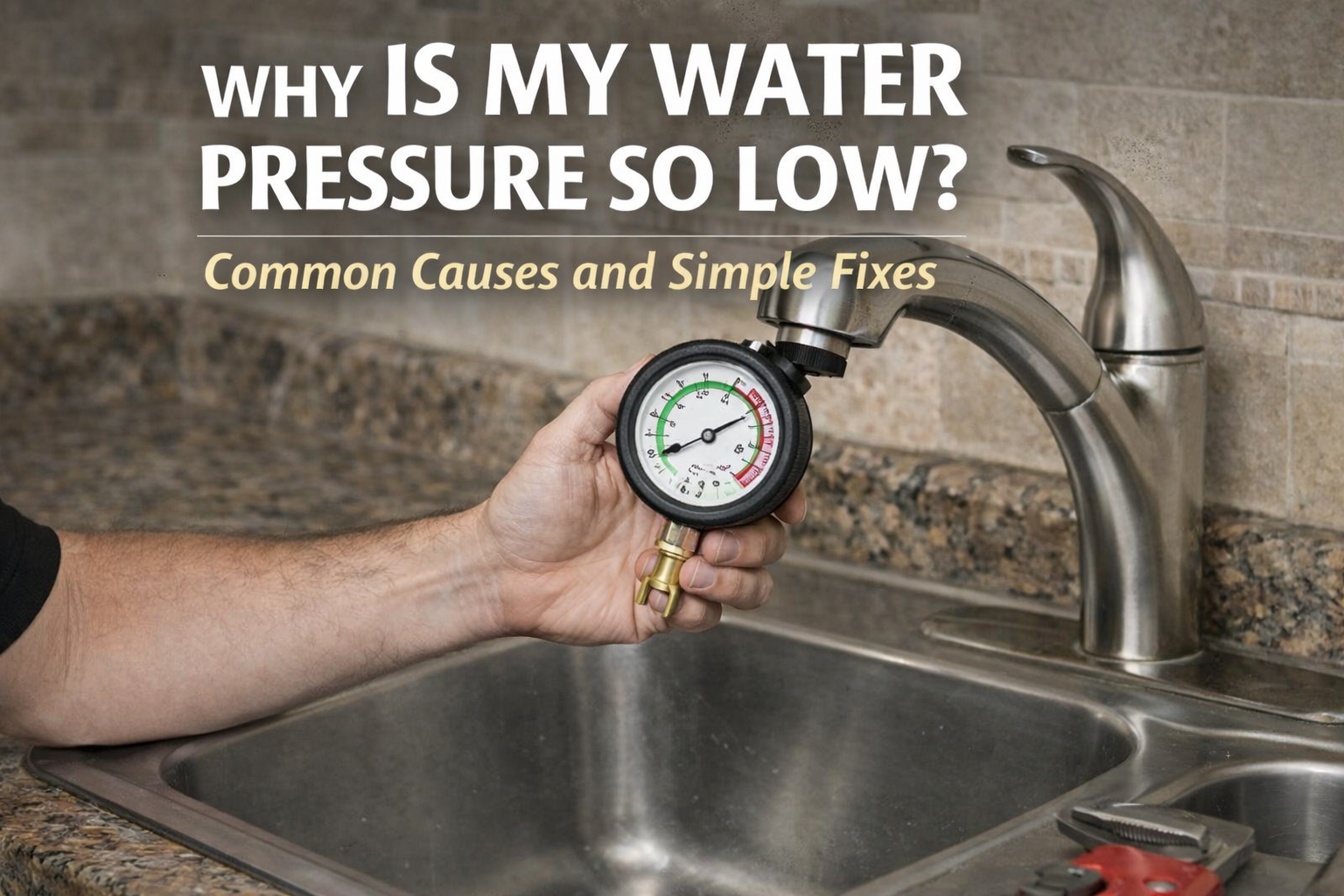
Low water pressure can be one of the most frustrating issues in a home. A weak shower, slow-filling sink, or a dishwasher that struggles to clean dishes properly can disrupt daily routines. While sometimes it’s a simple fix, low water pressure can also signal underlying plumbing problems that, if ignored, may become costly. Understanding the common causes and knowing what you can do about it can save both time and money.
Common Causes of Low Water Pressure
Several factors can contribute to reduced water pressure in your home:
Clogged Aerators or Showerheads: Mineral deposits can build up over time, restricting water flow. A quick cleaning or replacement often restores normal pressure.
Sediment Buildup in Pipes or Water Heater: Hard water can leave behind minerals that accumulate inside pipes or water heaters, reducing flow. Flushing the water heater and using descaling solutions for pipes can help.
Partially Closed Valves: Sometimes the main water valve or individual fixture valves are not fully open, which can limit water pressure throughout the house.
Pressure-Reducing Valve (PRV) Issues: Homes with a PRV may experience low pressure if the valve is incorrectly set or malfunctioning.
Corroded or Old Pipes: Over time, galvanized or iron pipes can corrode from the inside, narrowing the interior and restricting water flow.
DIY Checks and Quick Fixes
Many water pressure issues can be diagnosed and corrected without professional help. Try these steps first:
Clean Faucet Aerators and Showerheads: Remove them and soak in vinegar to dissolve mineral deposits, then rinse and reattach.
Check Valves: Ensure the main water supply and individual shut-off valves are fully open. Sometimes a simple adjustment restores pressure.
Flush Your Water Heater: Draining and flushing your tank removes sediment buildup that may be slowing water flow.
Inspect for Visible Leaks: Look for dripping pipes, damp spots, or water pooling near your plumbing. Even small leaks can reduce pressure.
When to Call a Professional
While many fixes are simple, some issues require a licensed plumber:
Low water pressure affects multiple fixtures or persists despite DIY fixes
Sudden drops or inconsistent water flow throughout the day
Old or corroded plumbing that may need replacement
PRV or municipal supply issues that need professional calibration
A professional can inspect your system thoroughly, identify hidden problems, and recommend the most effective solutions.
Preventative Tips for Maintaining Water Pressure
Keeping your water pressure steady over time is easier when you take preventative measures:
Schedule annual inspections of valves, fixtures, and your water heater
Flush your water heater regularly to prevent sediment buildup
Consider upgrading old plumbing for more consistent flow
For larger homes, a water pressure booster may be a worthwhile investment
Final Thoughts
Don’t let low water pressure disrupt your home or business. Simple checks today can prevent more serious problems tomorrow, saving both money and stress. Whether it’s a clogged aerator or a corroded pipe, taking action early keeps your water flowing smoothly. If you’re unsure about the cause, our licensed plumbers can inspect your system, recommend the best solutions, and ensure your home is running at full pressure.