

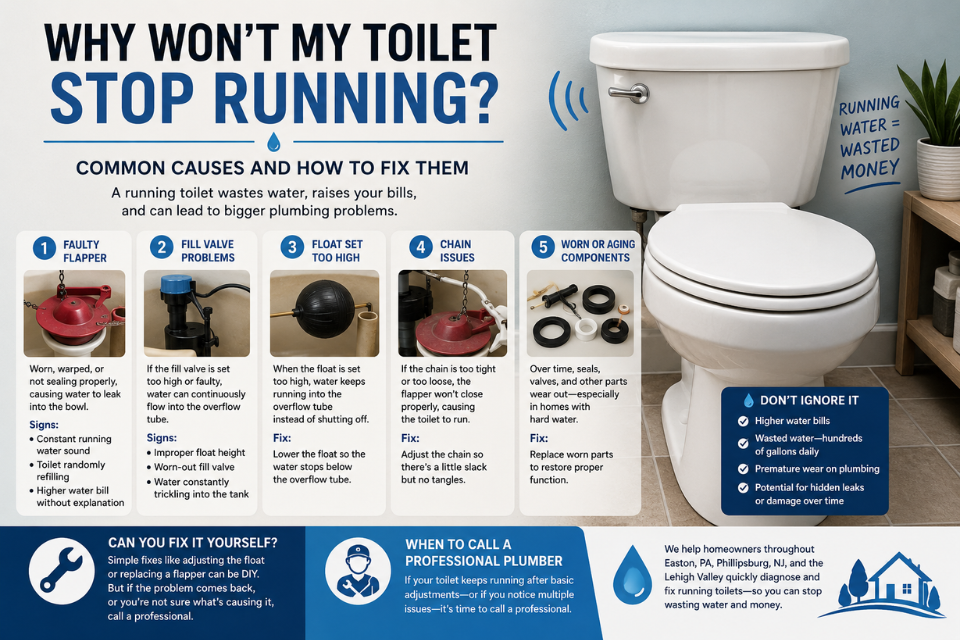
Common Causes and How to Fix Them
A running toilet is one of the most common plumbing issues homeowners face—and it’s also one of the most frustrating. Not only is the constant sound annoying, but a toilet that won’t stop running can waste hundreds of gallons of water per day, leading to higher utility bills and unnecessary wear on your plumbing system.
If you’re asking yourself, “Why won’t my toilet stop running?”, the answer usually comes down to a few common components inside the tank. The good news is that many of these issues are easy to identify—but they still require proper repair to prevent ongoing problems.
What Causes a Running Toilet?
Your toilet tank has several internal parts that work together to control water flow. When one of these parts isn’t working properly, water continues to run instead of stopping after a flush.
1. Faulty Flapper (Most Common Issue)
The toilet flapper is a rubber seal at the bottom of the tank that lifts when you flush and closes afterward. If it’s worn out, warped, or not sealing properly, water will continuously leak into the bowl.
Signs of a bad flapper:
- Constant running water sound
- Toilet randomly refilling
- Higher water bill without explanation
2. Fill Valve Problems
The fill valve controls how water refills the tank after each flush. If it’s set too high or malfunctioning, water can continuously flow into the overflow tube.
Common issues include:
- Improper float height
- Worn-out fill valve
- Water constantly trickling into the tank
3. Float Set Too High
The float determines when the water should stop filling. If it’s set too high, water will keep running into the overflow tube instead of shutting off.
This is a simple adjustment, but if ignored, it can waste a significant amount of water over time.
4. Chain Issues
The chain connected to the flush handle and flapper can also cause problems.
- If the chain is too tight, the flapper won’t close fully
- If it’s too loose, it may get caught under the flapper
Either way, the seal is compromised, causing the toilet to run continuously.
5. Worn or Aging Toilet Components
In older toilets, multiple parts may be worn out at the same time. Seals, valves, and internal components naturally degrade over time—especially in homes with hard water.
This is common in many homes throughout the Lehigh Valley, where aging plumbing systems can contribute to recurring toilet issues.
Why You Shouldn’t Ignore a Running Toilet
A running toilet might seem like a minor inconvenience, but it can lead to bigger problems if left unchecked.
- Increased water bills from constant water usage
- Wasted water—sometimes hundreds of gallons daily
- Premature wear on plumbing components
- Potential for hidden leaks or damage over time
Addressing the issue early can save you money and prevent more serious repairs.
Can You Fix It Yourself?
Some toilet repairs, like adjusting the float or replacing a flapper, can be simple DIY fixes. However, if the problem keeps coming back or you’re unsure what’s causing it, it’s best to have a professional take a look.
Improper repairs can lead to:
- Ongoing leaks
- Incorrect installation of parts
- Damage to other components inside the tank
When to Call a Professional Plumber
If your toilet continues running after basic adjustments—or if you notice multiple issues—it’s time to call a professional.
At Applause Plumbing & Heating, we help homeowners throughout Easton, PA, Phillipsburg, NJ, and the Lehigh Valley quickly diagnose and fix running toilets. Whether it’s a simple repair or a full toilet replacement, we make sure the job is done right the first time.
Final Thoughts
A toilet that won’t stop running is more than just an annoyance—it’s a sign that something in your plumbing system needs attention. By understanding the common causes, you can take action early and avoid bigger problems down the road.
If you’re dealing with a running toilet or any other plumbing issue, getting it inspected sooner rather than later can save time, money, and frustration.