

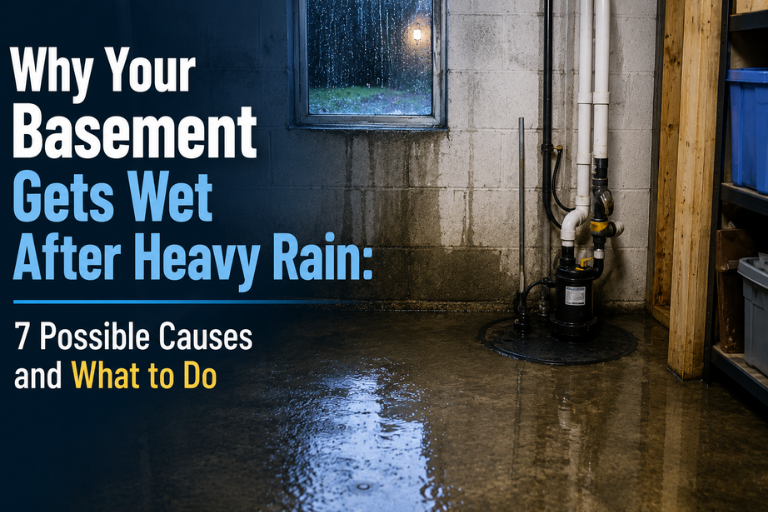
Heavy rain can expose problems in your home that you may not notice during normal weather.
Maybe you walk downstairs after a storm and find a wet spot on the basement floor. Maybe water is coming through a wall, collecting around a floor drain, or appearing near your sump pump.
The important thing is not to assume every basement leak is caused by the foundation.
Water can enter a basement for several different reasons—including drainage problems, sump pump issues, foundation cracks, clogged drains, and even sewer problems.
Here are some of the most common causes and the warning signs homeowners should watch for.
1. Your Sump Pump Can't Keep Up
Your sump pump is designed to remove groundwater that collects around your home's foundation.
During a major storm, however, the amount of water entering the drainage system can increase dramatically. If the pump is old, clogged, malfunctioning, or simply unable to keep up, water can begin collecting in the basement.
Watch for:
- The sump pump running constantly
- Unusual noises coming from the pump
- Water collecting around the sump pit
- The pump turning on and off repeatedly
- No water coming from the discharge pipe outside
- Basement flooding during or immediately after storms
A power outage can also stop a sump pump from operating when you need it most.
For homeowners who regularly experience heavy rain, a battery backup sump pump can provide an additional layer of protection.
2. Gutters and Downspouts Are Sending Water Toward Your Foundation
Sometimes the problem isn't actually in your basement—it's outside.
Gutters collect enormous amounts of water during a heavy storm. If they are clogged, damaged, or overflowing, that water can fall directly next to your foundation.
Downspouts can create a similar problem if they discharge too close to the house.
Check your exterior after a storm for:
- Overflowing gutters
- Clogged downspouts
- Water pooling near the foundation
- Downspouts that end too close to the house
- Soil that slopes toward the foundation
Getting water away from your house is one of the simplest ways to reduce the risk of basement moisture.
3. Hydrostatic Pressure Is Pushing Water Through the Foundation
After prolonged or heavy rainfall, the soil surrounding your foundation can become saturated.
As water builds up in the soil, it can create pressure against foundation walls and floors. That pressure may force water through existing cracks, joints, or other weak points.
You may notice:
- Damp or discolored basement walls
- Water coming through a visible crack
- Wet areas where the wall meets the floor
- Moisture that appears shortly after heavy rain
- Repeated leaks in the same location
A recurring leak shouldn't simply be dried up and forgotten. Finding where the water is coming from is important for determining the appropriate repair.
4. A Basement Floor Drain Is Backing Up
If water is coming up through a floor drain, rather than through a wall or foundation, you may be dealing with a drainage or sewer problem.
Heavy rain can put additional stress on drainage systems. If a drain or sewer line is clogged or damaged, water may have nowhere to go and can back up into the lowest fixtures in the home.
Pay attention if you notice:
- Water rising from a basement floor drain
- Multiple drains backing up at the same time
- Gurgling sounds
- Sewage odors
- Toilets or other fixtures draining slowly
- Water appearing when another fixture is used
This type of problem should be evaluated by a professional, especially if wastewater is involved.
5. A Foundation Crack Is Allowing Water Inside
Foundation cracks aren't always an immediate emergency, but they should not automatically be ignored.
A small crack can become a pathway for water when the surrounding soil becomes saturated.
If you notice a crack that repeatedly becomes wet after rainfall, take a photo and monitor it. Look for changes in the size of the crack, staining, or increasing moisture.
If the crack is large, growing, accompanied by significant water intrusion, or associated with other foundation concerns, have it evaluated by an appropriate professional.
6. Your Basement Drainage System Is Blocked or Overwhelmed
Some homes have interior drainage systems designed to collect groundwater and direct it toward a sump pit.
If part of that system becomes blocked—or if the volume of water exceeds what the system can handle—water may begin appearing in the basement.
This can be particularly noticeable during intense storms when groundwater levels rise quickly.
A professional can help determine whether the issue is related to the sump pump, drainage system, plumbing, or another source.
7. A Plumbing Leak May Be Getting Blamed on the Rain
Sometimes the timing is misleading.
You may notice water in the basement after a storm and assume the rain caused it. But a leaking water heater, pipe, washing machine connection, or other plumbing fixture can create water in the basement regardless of what's happening outside.
If the water continues appearing when the weather is dry, that is an important clue.
Try to determine whether the water:
- Appears only during or after rainfall
- Continues when there has been no rain
- Is located near plumbing equipment
- Has an unusual odor or color
- Appears to be coming from a pipe, fixture, wall, or floor
Knowing when the leak occurs can help a plumber narrow down the source.
How to Tell Where Your Basement Water Is Coming From
The location of the water can provide an important clue.
Water coming through a wall
This may point toward groundwater, exterior drainage, or a foundation issue.
Water appearing where the wall meets the floor
This can be associated with groundwater pressure or basement drainage problems.
Water coming from a floor drain
This may indicate a drain or sewer backup.
Water around the sump pit
The sump pump or surrounding drainage system may need attention.
Water near a water heater or plumbing fixtures
A plumbing leak may be the culprit rather than rainwater.
Remember that these are clues—not a diagnosis. Several problems can occur at the same time.
What Should You Do If Your Basement Floods After a Storm?
If you discover water in your basement after heavy rain, don't panic. Start by determining whether it is safe to enter the affected area.
If electrical equipment, outlets, appliances, or extension cords are in standing water, avoid entering the water and contact the appropriate professional for help.
If it is safe to do so:
- Identify where the water appears to be coming from.
- Check whether your sump pump is running.
- Look outside at your gutters and downspouts.
- Move valuables away from the affected area.
- Take photos of the water and any visible damage.
- Avoid using chemical drain cleaners if you suspect a sewer or drain problem.
- Contact a professional if the leak continues, returns, or you cannot determine the cause.
Don't Ignore a Basement Leak That Keeps Coming Back
One wet basement after an unusually severe storm doesn't necessarily mean your home has a major plumbing problem.
But if water keeps returning every time it rains, that's a sign that something needs to be investigated.
Repeated moisture can contribute to mold and mildew, damage drywall and flooring, affect stored belongings, and potentially turn a relatively manageable problem into a much more expensive repair.
The sooner you determine where the water is coming from, the sooner you can address the underlying problem.
When Should You Call a Plumber?
Consider calling a professional if:
- Your basement repeatedly floods after rain
- Your sump pump isn't working properly
- Water is backing up through a basement drain
- Multiple drains are backing up
- You notice sewage or wastewater
- You cannot identify the source of the water
- A plumbing leak may be contributing to the problem
- Your attempts to address the issue haven't solved it
A professional plumber can help determine whether the problem is related to your plumbing, drainage, sump pump, or another component of the home's water-management system.
Need Help With a Wet or Flooded Basement?
Heavy rain can put your home's plumbing and drainage systems to the test. If water keeps showing up in your basement after storms, don't just clean it up and wait for the next one.
Finding the source of the water is the first step toward protecting your home from repeat damage.
Applause Plumbing & Heating provides plumbing services throughout Pennsylvania and New Jersey. If you're dealing with basement water, drainage problems, sump pump issues, or a plumbing backup, contact our team to discuss the problem and determine the next step.