

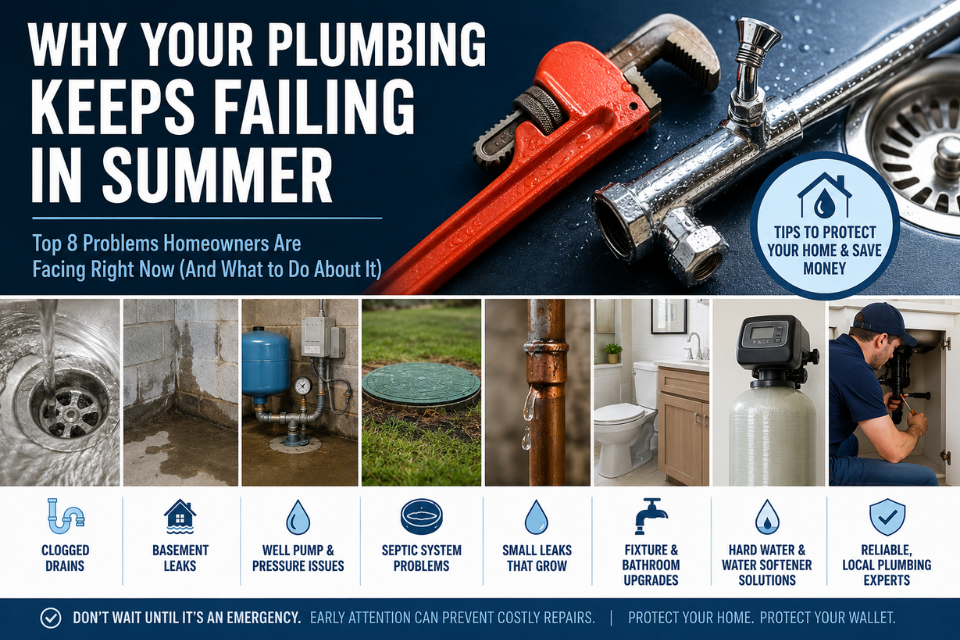
Why Your Plumbing Keeps Failing in Summer (And What to Do About It)
If it feels like plumbing problems show up all at once in the summer—you’re not imagining it.
Right now, homeowners are asking about the same issues: clogged drains, failing well pumps, basement leaks, and septic problems. These aren’t random—they’re seasonal patterns.
Here’s what’s going wrong—and how to stop a small issue from turning into a costly repair.
1. Clogged Drains Are Getting Worse
Homeowners are actively searching for help with clogged drains right now.
Why it happens in summer:
- More people in the house (kids home, guests visiting)
- Increased cooking and grease buildup
- Soap scum and hair accumulation
What to do:
- Skip chemical drain cleaners (they damage pipes)
- Try a plunger or manual snake
- If multiple drains are slow → likely a main sewer line issue
2. Basement Leaks After Rain or Humidity
Flooding and water seepage are a major concern this time of year.
Common causes:
- Sump pump failure
- Foundation cracks
- Poor exterior drainage
Warning signs:
- Damp walls or floors
- Musty smells
- Water along basement edges
Important: This is one of the fastest problems to escalate into mold and structural damage.
3. Well Pumps & Water Pressure Problems
If your home runs on well water, summer is peak failure season.
Symptoms:
- No water (even with power)
- Weak pressure during showers
- Water cutting in and out
Likely issues:
- Failing well pump
- Pressure tank problems
- Sediment buildup
Pro tip: Track when the issue happens (morning, laundry, full house). That helps diagnose faster.
4. Septic Systems Start Failing Mid-Summer
Many homeowners don’t realize septic problems are seasonal—but they are.
Why now:
- Increased household usage
- Ground conditions shift
- Systems haven’t been checked since spring
Warning signs:
- Gurgling drains
- Slow flushing toilets
- Wet patches in yard
Preventative tip: Routine pumping is far cheaper than emergency repair.
5. Small Leaks That Turn Into Big Repairs
Many posts mention “tiny leaks” that homeowners aren’t sure are worth fixing.
Common examples:
- Pinhole leaks in copper pipes
- Washing machine hose drips
- Minor corrosion
Why this matters:
- Leaks spread behind walls
- Mold can develop quickly
- DIY fixes (like putty) are temporary at best
6. Bathroom Upgrades & Fixture Issues
Not everything is an emergency—many homeowners are upgrading or repairing bathrooms:
- Shower replacements and vanity installs
- Toilet repairs or replacements
- Faucet and shower valve issues
Tip: Improper installation is one of the most common causes of future leaks.
7. Hard Water & Water Softener Concerns
Water quality is becoming a bigger issue in local homes.
Signs of hard water:
- White buildup on fixtures
- Dry skin and brittle hair
- Reduced appliance lifespan
Solution:
A properly sized water softening system can protect your plumbing and improve water quality.
8. Homeowners Want One Thing: A Reliable Plumber
Across nearly every post, homeowners are asking for the same thing—someone trustworthy and reasonably priced.
What matters most:
- Fast response time
- Fair pricing
- Licensed and experienced work
- Clear communication
When Should You Call a Plumber?
Don’t wait until it’s an emergency. Call if you notice:
- Sudden drop in water pressure
- Slow drains throughout the home
- Water stains or damp areas
- Unusual noises in pipes
- Any visible leaks
Final Thought: Most Plumbing Problems Give Warning Signs
The biggest mistake homeowners make is waiting too long.
A slow drain, small leak, or slight pressure change might seem minor—but these are early warning signs of larger issues.
Fixing them early is the difference between a simple repair and a major expense.
Need Help With a Plumbing Issue?
If you're in PA or NJ and noticing any of these problems, getting it checked early can save you time, money, and stress.
Even a quick inspection can prevent a much bigger repair later.
Serving homeowners across PA & NJ with honest, reliable plumbing solutions.