

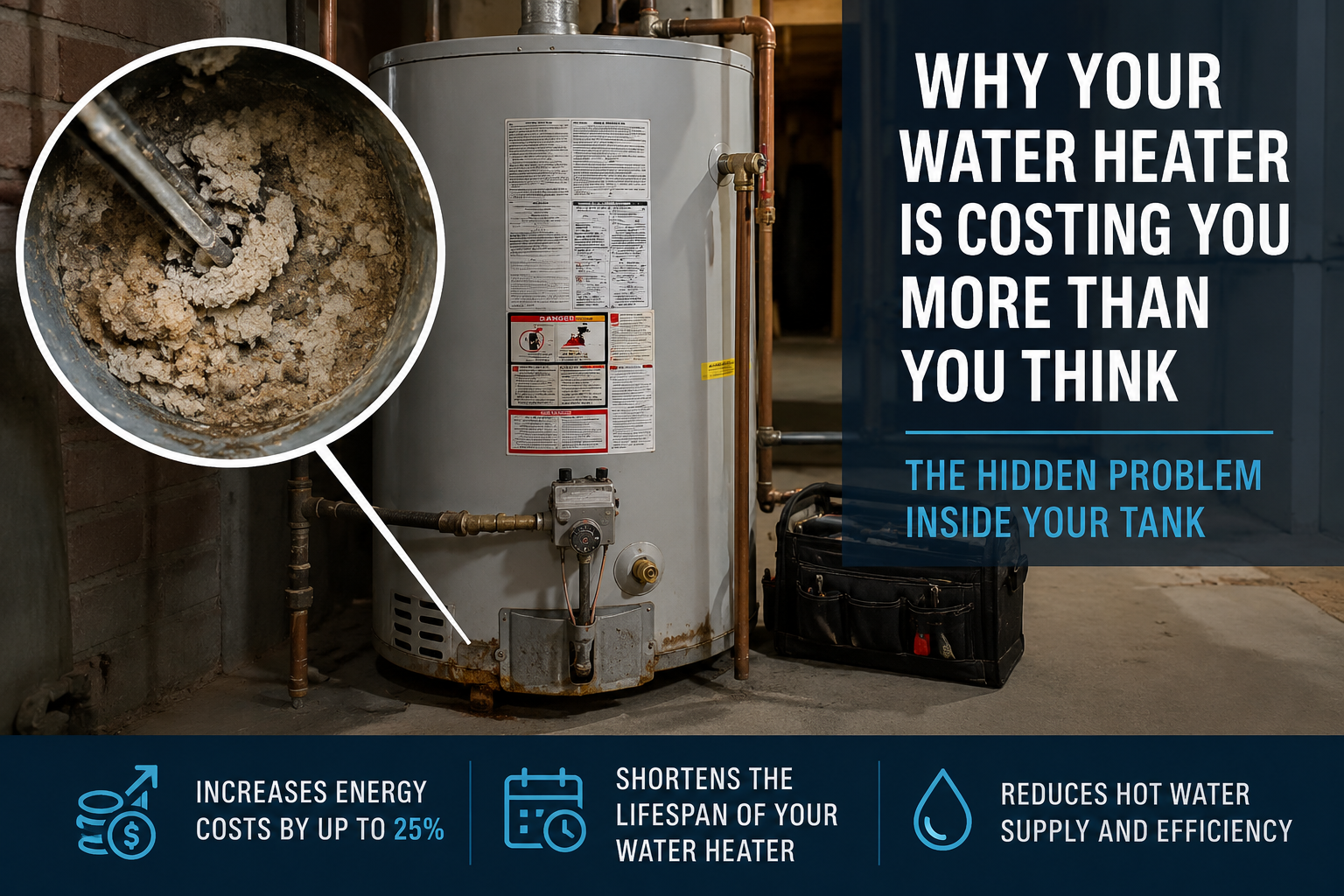
Most homeowners don’t realize that one of the biggest threats to their water heater isn’t age or brand—it’s what’s happening inside the tank. Over time, minerals like calcium and magnesium naturally found in water begin to settle at the bottom of the unit. This process is known as water heater sediment buildup, and while it may seem harmless at first, it can quietly lead to higher energy bills, reduced performance, and a shorter lifespan for your system.
In fact, sediment buildup in a water heater can increase energy costs by up to 25% and significantly shorten the unit’s lifespan. As the layer of sediment thickens, it creates a barrier between the heating element or burner and the water itself. This forces the system to work harder and longer to produce the same amount of hot water, reducing overall water heater efficiency and driving up utility costs without homeowners even realizing it.
One of the most common signs of this issue is when people start asking, “Why is my water heater making noise?” That popping or rumbling sound you hear is often caused by water trapped beneath hardened sediment. As the water heats, it pushes through the buildup, creating those unusual noises. These sounds are more than just a nuisance—they’re an early warning sign that your tank water heater is under stress and in need of attention.
Another symptom many homeowners notice is that their hot water is running out more quickly than it used to. This happens because sediment takes up valuable space inside the tank, reducing the amount of hot water available. What once felt like a full tank of hot water may now feel like it’s barely lasting through a single shower. In many cases, people assume they need a larger water heater, when the real issue is simply buildup inside the existing one.
Regular water heater maintenance plays a key role in preventing these problems. Flushing a water heater helps remove sediment before it hardens and causes long-term damage. This simple service can improve efficiency, restore hot water capacity, and help extend the life of the unit. Ignoring maintenance, on the other hand, allows the buildup to continue, increasing the likelihood of costly repairs or even premature replacement.
For homeowners in Easton, PA and throughout the Lehigh Valley, mineral content in the water can contribute to faster sediment accumulation. That’s why it’s especially important to pay attention to signs your water heater needs service, such as unusual noises, inconsistent hot water, or rising energy bills. Addressing these issues early can help reduce energy costs and keep your system running reliably.
Understanding what causes these common water heater problems gives you an advantage as a homeowner. Instead of waiting for your system to fail, you can take proactive steps to maintain it and avoid unnecessary expenses. If your water heater isn’t performing like it used to, the problem may not be the unit itself—it may be what’s building up inside it.