

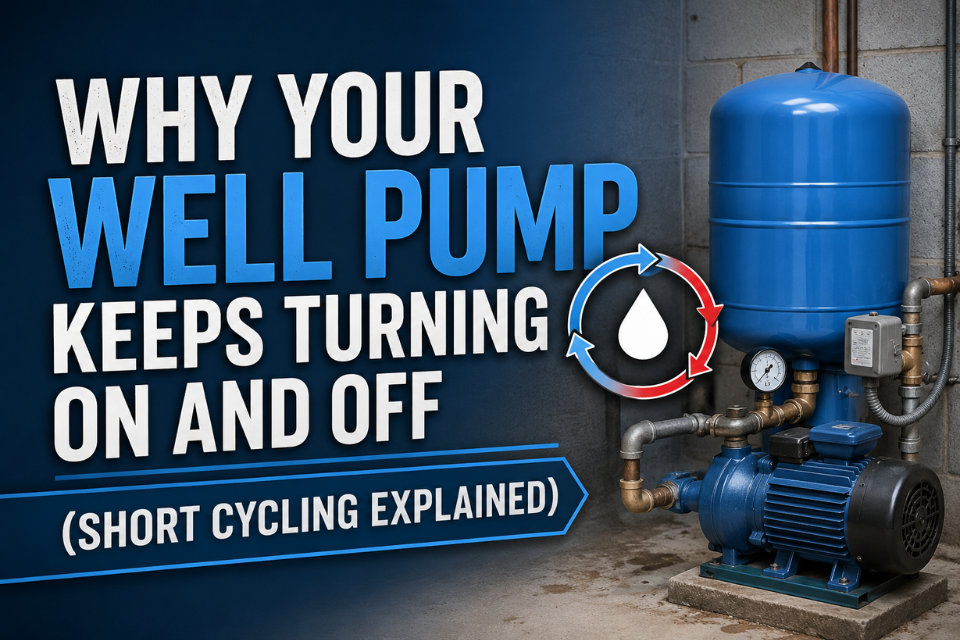
If your well pump keeps turning on and off every few seconds or minutes, it’s not just annoying—it’s a warning sign. This issue is called short cycling, and if it’s not addressed quickly, it can lead to expensive damage to your well system.
In this guide, we’ll explain what short cycling is, what causes it, and what you should do before it turns into a major repair.
What Is Short Cycling?
Short cycling happens when your well pump rapidly turns on and off instead of running in normal, steady cycles. A properly functioning system should run long enough to build pressure, then stay off for a reasonable period before turning on again.
If your pump is:
- Clicking on and off every few seconds
- Running briefly, then shutting off repeatedly
- Causing noticeable pressure fluctuations
…it’s likely short cycling—and it’s not normal.
What Causes a Well Pump to Short Cycle?
There are several possible causes, but most of them point back to one key component: your pressure tank.
1. Failing or Waterlogged Pressure Tank
This is the most common cause. Your pressure tank is designed to store water and maintain steady pressure. Inside, it has an air bladder that helps regulate flow.
When that bladder fails or becomes waterlogged:
- The tank can’t hold pressure properly
- The pump has to turn on constantly
- The system becomes unstable
2. Low Air Pressure in the Tank
Even if the tank isn’t fully failed, incorrect air pressure can cause rapid cycling. The tank needs the right air charge to function properly.
3. Faulty Pressure Switch
The pressure switch tells your pump when to turn on and off. If it’s worn out, dirty, or malfunctioning, it may trigger the pump too frequently.
4. Leaks in the System
A hidden leak in your plumbing system can cause pressure to drop continuously, forcing the pump to keep turning on to compensate.
5. Sediment or Mineral Buildup
Over time, sediment can clog components like the pressure switch or pipes, interfering with normal operation.
Why Short Cycling Is a Serious Problem
Short cycling isn’t just a minor inconvenience—it can cause real damage.
Here’s what can happen if you ignore it:
- Pump burnout – Constant starting and stopping puts extreme strain on the motor
- Higher electric bills – Your system is working harder than it should
- Inconsistent water pressure – Showers and faucets may surge or drop suddenly
- Premature system failure – Small issues turn into major repairs quickly
Replacing a well pump can cost thousands, so catching this early matters.
Simple Checks Homeowners Can Do
While most well system repairs should be handled by a professional, there are a few safe things you can check:
- Listen: Is the pump turning on and off frequently?
- Watch the pressure gauge: Does it jump quickly up and down?
- Look for visible leaks around the tank or piping
- Pay attention to pressure changes in your home
If you notice any of these signs, it’s time to take action.
When to Call a Plumber
You should call a professional if:
- Your pump cycles every few seconds or minutes
- Water pressure is inconsistent
- You hear clicking or rapid switching sounds
- Your system seems louder than usual
- You suspect the pressure tank is failing
A licensed plumber can quickly diagnose whether the issue is the tank, switch, or pump—and prevent further damage.
Repair vs. Replacement: What Should You Expect?
The fix depends on the root cause:
- Pressure tank replacement – Common and usually more affordable
- Pressure switch replacement – Smaller repair if caught early
- Well pump replacement – More expensive, especially if damage has already occurred
Catching the problem early often means a simpler, less costly repair.
Don’t Wait—Short Cycling Gets Worse Fast
Short cycling is one of those issues that doesn’t fix itself. The longer it goes on, the more stress it puts on your system—and the higher the risk of a full pump failure.
If your well pump is turning on and off more than it should, it’s best to have it checked before it becomes a major expense.
Need Help Diagnosing Your Well System?
If you’re in our service area, Applause Plumbing & Heating can inspect your well system and pinpoint the issue—whether it’s your pressure tank, switch, or pump.
We’ll give you a clear, honest recommendation so you can fix the problem before it turns into a costly repair.