

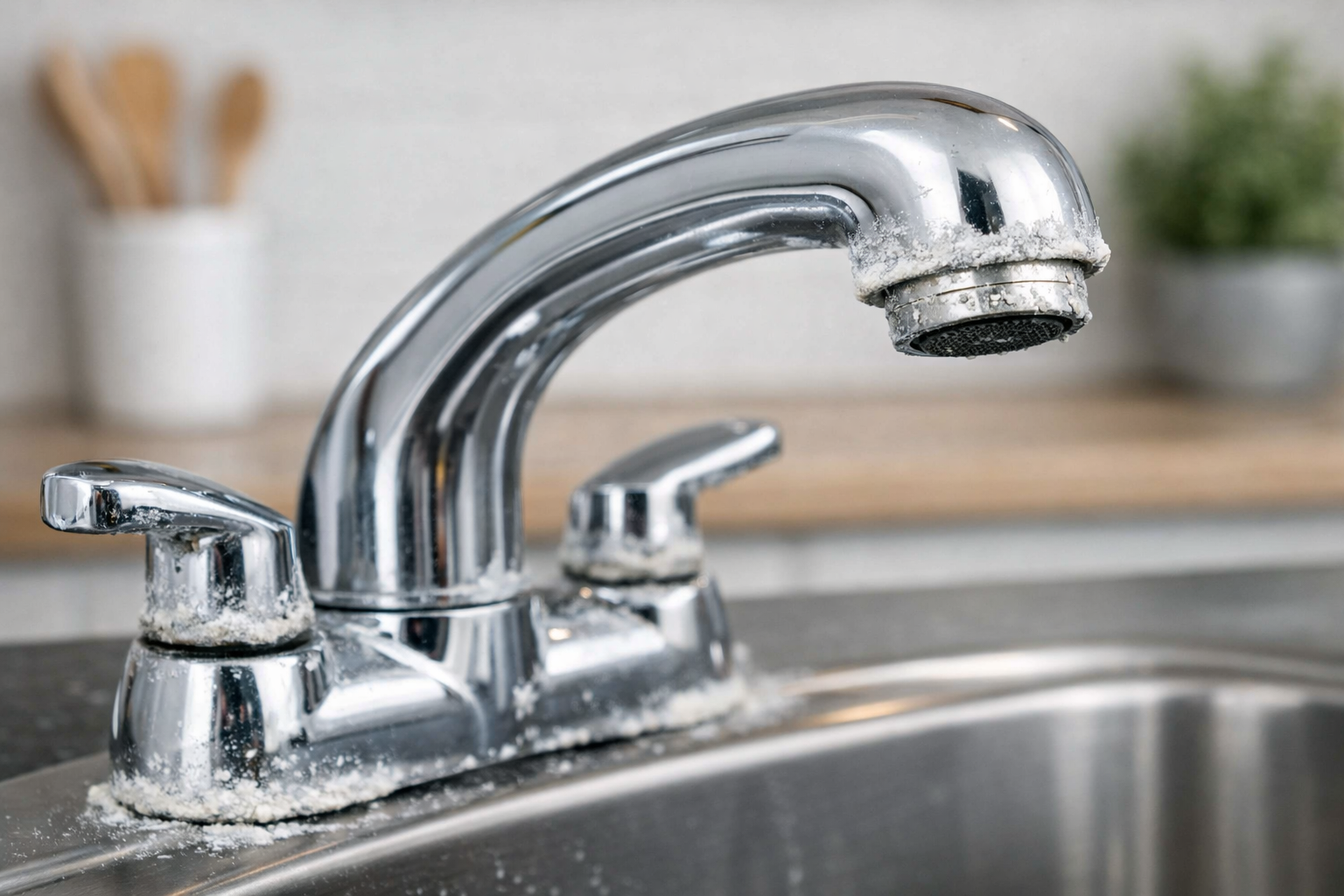
If you’ve noticed white buildup on faucets, dry skin after showers, or water pressure slowly getting worse, hard water may be the hidden cause.
Hard water is common in many parts of New Jersey and Pennsylvania, and while it’s generally safe to drink, it can quietly damage plumbing systems over time. Understanding how hard water works — and how it affects your pipes — can help homeowners prevent costly repairs.
What Is Hard Water?
Hard water contains high levels of dissolved minerals, mainly calcium and magnesium. As water flows through underground rock and soil, it picks up these minerals before entering your home.
While hard water isn’t a health risk, it creates scale buildup inside your home’s plumbing system.
Common Signs of Hard Water in a Home
Many homeowners live with hard water for years without realizing it. Common warning signs include:
White or chalky residue on faucets and showerheads
Soap that doesn’t lather well
Dry, itchy skin or dull hair after bathing
Cloudy glassware or spotted dishes
Fading laundry
That last one often sends people searching online — and for good reason.
How Hard Water Damages Plumbing Systems
1. Scale Buildup Inside Pipes
As hard water flows through pipes, minerals slowly stick to the pipe walls. This buildup, known as limescale, reduces the internal diameter of the pipe.
Over time, this can:
Restrict water flow
Reduce water pressure
Increase the risk of clogs
Put stress on older plumbing systems
In severe cases, pipes may need professional cleaning or replacement.
2. Shortened Lifespan of Water Heaters
Hard water is especially rough on water heaters.
Minerals settle at the bottom of the tank, creating sediment that:
Reduces heating efficiency
Increases energy bills
Causes overheating and premature failure
Tank-style water heaters in hard water areas often fail years earlier without regular maintenance.
3. Damage to Fixtures and Appliances
Hard water scale builds up in:
Faucets
Shower valves
Dishwashers
Washing machines
This leads to reduced performance, leaks, and expensive appliance replacements — often starting with leaking or malfunctioning plumbing fixtures.
Is Hard Water a Plumbing Emergency?
Not usually — but it is a slow, expensive problem if ignored.
Because damage happens gradually, many homeowners don’t realize what’s happening until:
Pressure drops significantly
Fixtures clog repeatedly
A water heater fails unexpectedly
Preventive action is far cheaper than emergency repairs.
Solutions for Hard Water Problems
Water Softener Systems
Water softeners reduce mineral content before water enters your plumbing system. Benefits include:
Improved water pressure over time
Longer appliance lifespan
Reduced scale buildup
Easier cleaning
A licensed plumber can determine whether a softener is appropriate based on your home’s plumbing and local water conditions.
Plumbing Maintenance
For homes already experiencing scale buildup:
Faucet aerators and showerheads can often be cleaned
Water heaters may benefit from professional flushing
Pipes may need inspection if pressure loss continues
Hard Water in New Jersey & Pennsylvania Homes
Many homes in Phillipsburg, Stewartsville, the Lehigh Valley, and surrounding areas experience moderate to hard water levels. Local plumbing systems, especially older homes, can be more vulnerable to mineral buildup.
If you’re noticing persistent pressure issues or recurring plumbing problems, hard water may be a contributing factor.
When to Call a Professional Plumber
You should contact a plumber if:
Water pressure keeps dropping
Fixtures clog repeatedly
A water heater makes popping or rumbling sounds
Scale buildup keeps returning quickly
Early evaluation can prevent major repairs later.
Need Help With Hard Water Issues?
Applause Plumbing and Heating helps homeowners diagnose plumbing problems and recommend long-term solutions — without unnecessary upsells.
📞 Contact us today to schedule an inspection.